


Latin America rarely comes up when people talk about cycling holidays, and it should. The Andes run the length of the continent like a spine, and on either side of them, the landscapes change fast: volcanoes and salt flats, cloud forest and desert, glaciers and vineyards. For riders, that means some of the biggest descents on the planet, roads that feel remote, and cultures that have been shaped by these mountains for thousands of years.
Here’s where we ride in Latin America and why these destinations should absolutely be on your radar.
Colombia
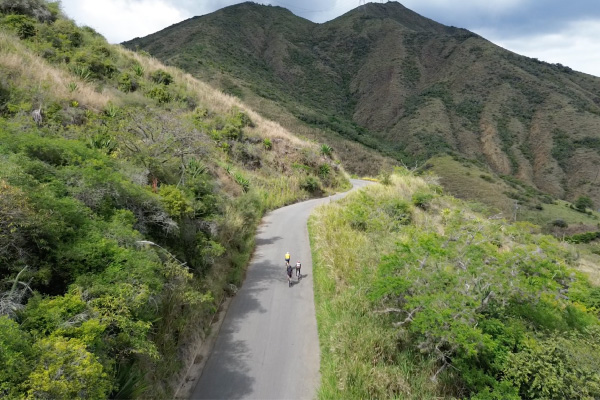
Colombia — The Coffee Region and the Cocora Valley
Colombia has one of the strongest cycling cultures on the continent, and its Coffee Region shows why. Known locally as the Eje Cafetero, this UNESCO World Heritage landscape is a patchwork of rolling green hills, working family farms and bright, colourful Andean towns, with coffee growing on almost every slope. Our routes wind through the farming communities that grow some of the world's finest Arabica, with a stop at a local farm to follow the coffee from bean to cup.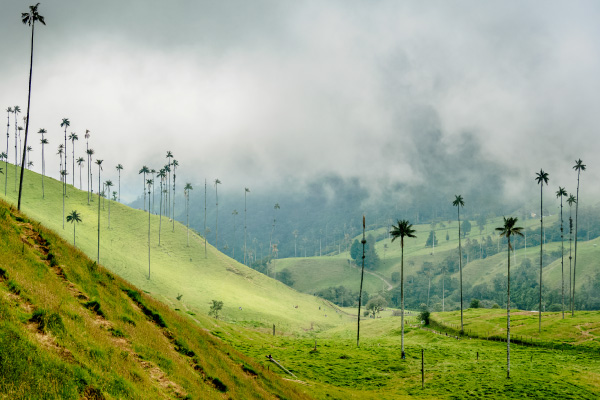
Then there's the Cocora Valley. Here the wax palm, the tallest palm species in the world and Colombia's national tree, grows straight up out of the misty cloud forest, its slender trunks towering over the green valley floor. It's one of the most surreal landscapes in South America, and we explore it on foot from the colourful town of Salento.
Ecuador
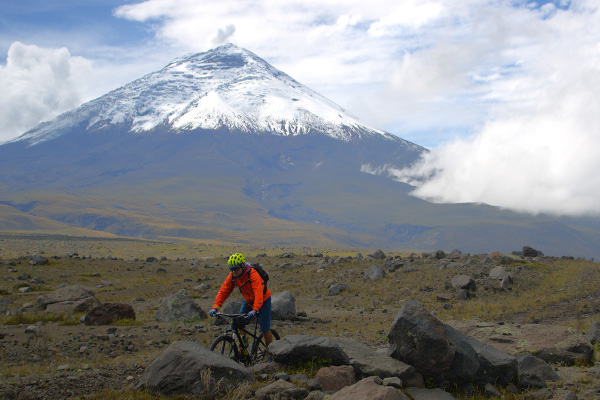
Ecuador — The Avenue of Volcanoes
When the explorer Alexander von Humboldt travelled through Ecuador's highlands in 1802, he gave the valley south of Quito a name that stuck: the Avenue of Volcanoes. Two giants dominate it.
The first is Cotopaxi. At 5,897 metres, it's one of the highest active volcanoes in the world, and one of the most perfectly symmetrical, a snow-capped cone that looks almost drawn onto the sky. Our route crosses its flanks on wide dirt roads through the páramo, the high-altitude grassland that blankets the Andes here.
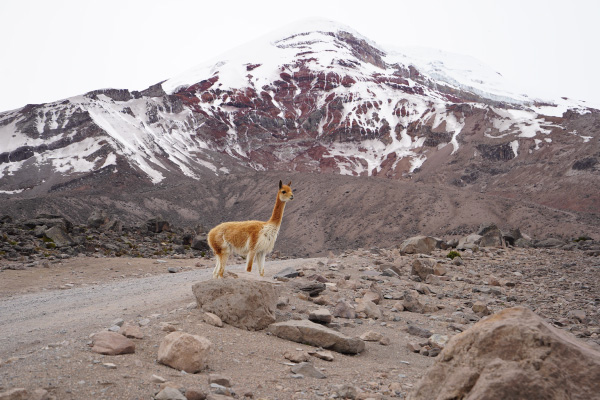
The second is Chimborazo, and it comes with the best trivia fact in South America. At 6,263 metres, it's nowhere near the tallest mountain on Earth. But because the planet bulges at the equator, and Chimborazo sits almost on top of it, its summit is the point on Earth's surface farthest from the planet's centre, about two kilometres farther out than the summit of Everest. On our tour, we descend from its slopes to a historic hacienda.
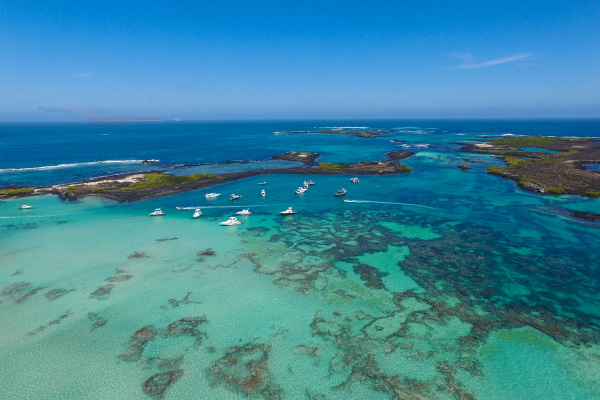
There's more to come in Ecuador. We're developing a Galápagos trip, where the wildlife that shaped Darwin's thinking still wanders up to you unbothered. We're also working on a cross-border route from Quito, Ecuador to Colombia's Putumayo region, where the Andes drop into the Amazon.. It starts in Quito, and rides north, visits Otavalo's market, one of the oldest and largest indigenous markets in South America, climbs through the Andean highlands, and crosses into Colombia near Ipiales. From Pasto, it drops into the Putumayo, the transition zone where the Andes give way to the Amazon. In the space of a couple of days, riders go from cold, windswept páramo to steamy rainforest.
Explore Riding Ecuador's Avenue of Volcanoes
Peru
Peru — From the Sacred Valley to the Amazon
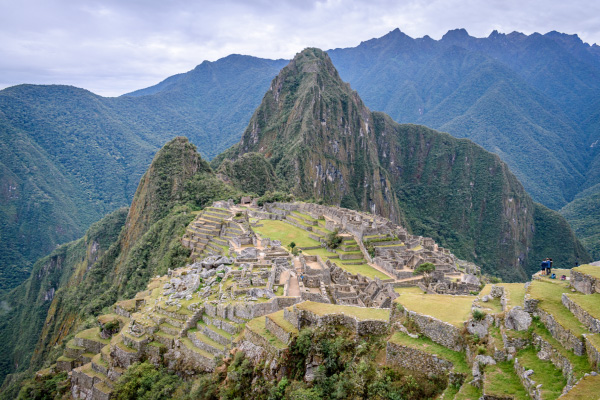
For most travelers, Peru means Machu Picchu , and our route makes time for it: a train ride through cloud forest to the "Lost City of the Incas" and a full guided visit. But the riding tells a bigger story.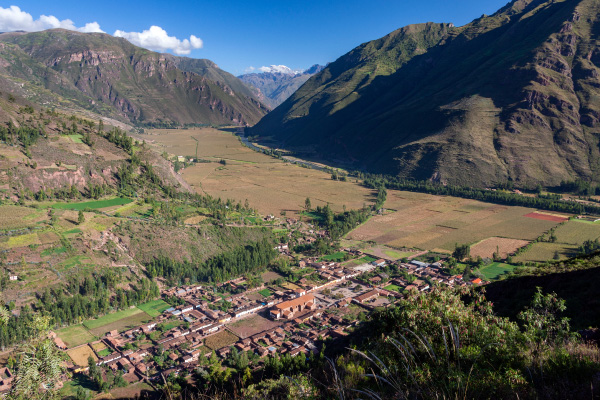
Starting in Cusco, we ride the Sacred Valley past Inca terraces and the artisan town of Pisac, then visit the circular terraces of Moray and the sparkling salt pans of Maras, which have been worked since before the Incas. Then comes the descent that defines the trip. From a pass at around 4,000 metres, we drop through the village of Paucartambo and into the cloud forest, losing more than 4,000 metres in a single day, before reaching the edge of Manu National Park, one of the most biodiverse places on Earth. Keep an eye out for the cock-of-the-rock, Peru's national bird, flashing scarlet in the trees.
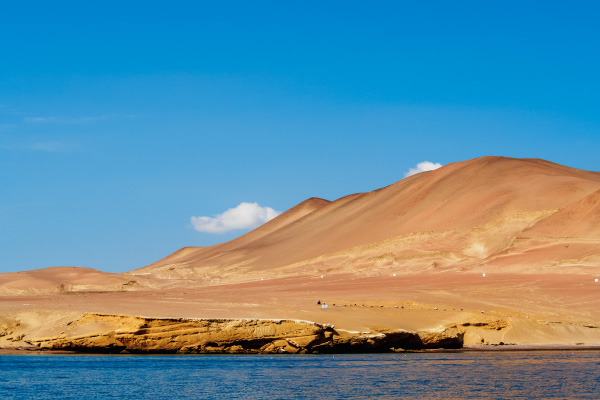
We're also building a coastal route that shows a side of Peru few people associate with cycling. Paracas is a marine reserve where sea lions, penguins and seabirds crowd the islands offshore. On a hillside above the bay sits the Candelabra, a geoglyph roughly 180 metres tall whose origins are still debated. Inland, Huacachina is a small desert oasis surrounded by some of the biggest sand dunes in South America. It's a desert-and-ocean Peru that most visitors never see.
Explore Biking Peru From the Andes to the Amazon
Bolivia
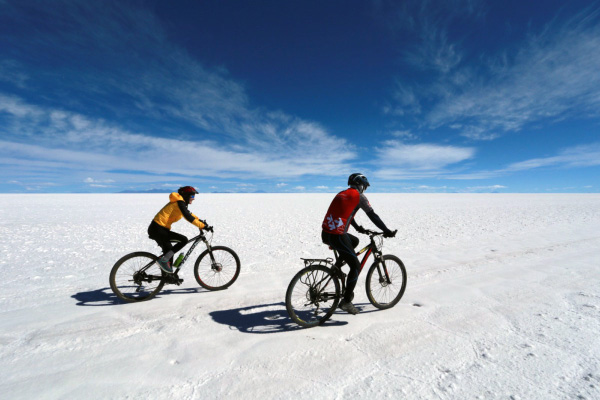
Bolivia — Salt Flats and the Death Road
The Salar de Uyuni covers more than 10,000 square kilometres, making it the largest salt flat on Earth. In the wet season, a thin layer of water turns it into a mirror so perfect that the horizon disappears and the sky seems to continue under your wheels. On our tour, we ride 38 kilometres across the salt crust to Incahuasi Island, an outcrop of fossilised coral covered in giant cacti, in the middle of all that white.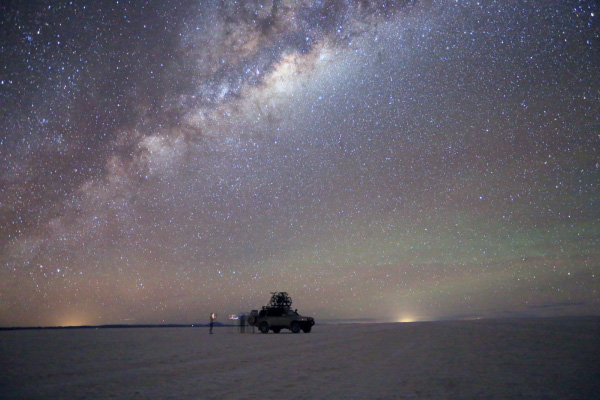
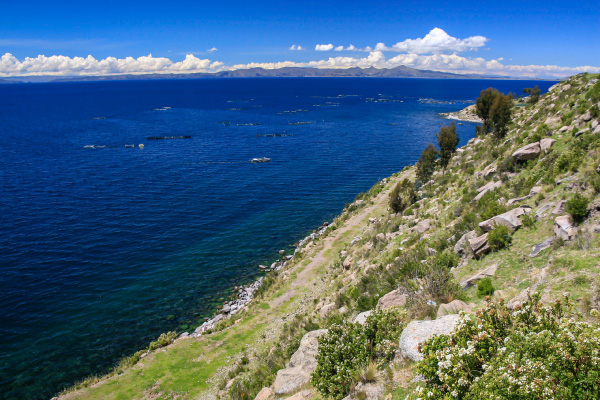
North of it lies the Altiplano, a high plateau averaging more than 3,500 metres, home to Lake Titicaca, the world's highest navigable lake, and the city of La Paz.
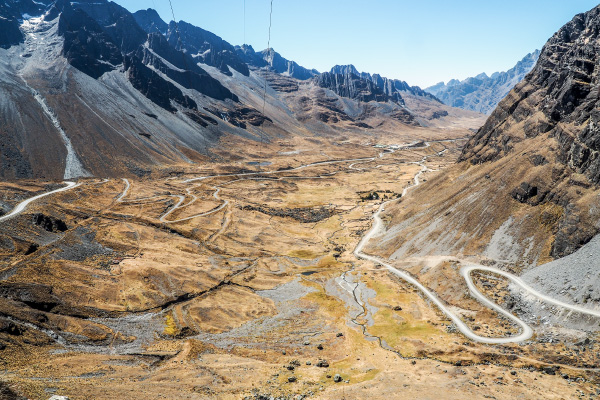
Then there's the ride that every mountain biker has heard of. The Yungas Road, better known as the Death Road, was once called the most dangerous road in the world. Today, with most traffic moved to a newer highway, it has become a cycling pilgrimage: 65 kilometres of unpaved road dropping from the cold high Andes through cloud forest towards the edge of the Amazon, with waterfalls spilling across the track and sheer drops beside it. With a guide who knows every bend, it's a ride you'll talk about for years.
Explore Cycling Bolivia: Andes, Altiplano & Salt Flats
Chile
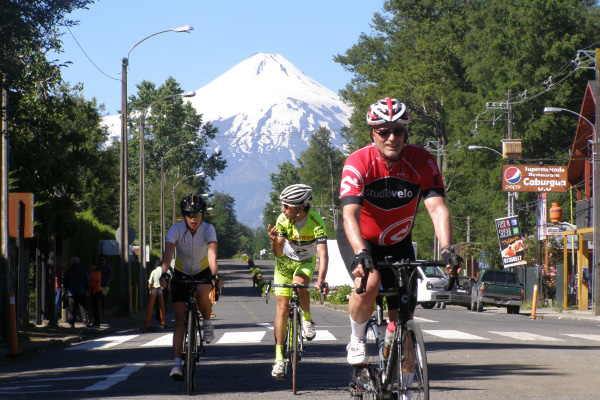
Chile — Lakes, Volcanoes and the Carretera Austral
Chile's Lake District is often compared to the Alps, and it's easy to see why: snow-capped volcanoes reflected in glacial lakes, green pasture, and small towns built by German settlers. Our new Lakes and Volcanoes road cycling tour rides 629 kilometres from Pucón to Puerto Montt over eight riding days, past smoking peaks, alpine lakes and ancient Patagonian rainforest. It's a proper road ride, averaging 79 kilometres and over 1,000 metres of climbing a day.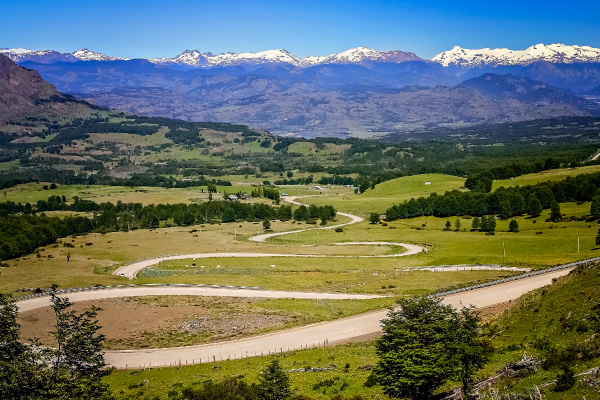
Further south is the Carretera Austral, one of the great remote roads of the world. It runs for around 1,240 kilometres through Chilean Patagonia, past fjords, hanging glaciers and temperate rainforest, with long stretches of nothing but wilderness. For many cyclists it's a bucket-list road, and it's firmly on ours.
Explore Road Cycling Chile: The Lakes and Volcanoes Route
Argentina
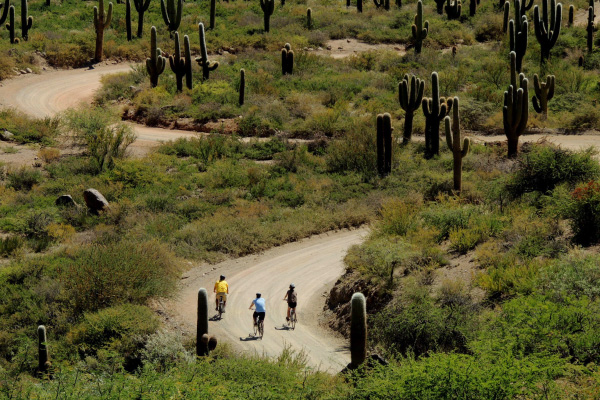
Argentina — Painted Mountains and the End of the World
Northwest Argentina is one of the continent's best-kept secrets. Our route starts in the colonial city of Salta and rides through a forest of giant candelabra cacti in Los Cardones National Park, along the legendary Ruta 40, and into Cafayate, where vineyards grow some of the highest-altitude wines in the world.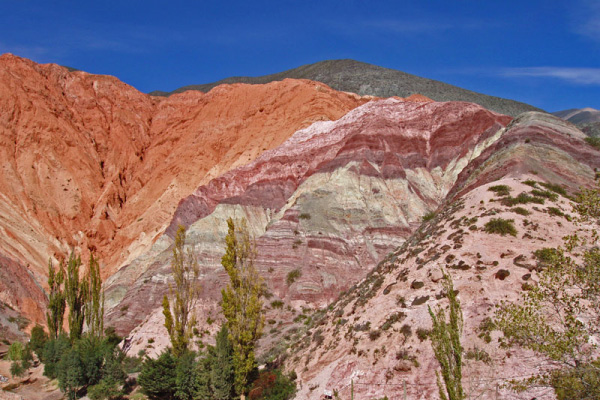
The showstopper is the Quebrada de Humahuaca, a UNESCO-listed valley whose mountains are striped in red, green, ochre and violet by layers of minerals laid down over millions of years. From there we head up to the Cuesta de Lipán pass at 4,170 metres, then ride down to the Salinas Grandes and straight out across the salt flat. And we're heading south. Our team is currently scouting Argentine Patagonia: vast, empty steppe, jagged granite peaks and glaciers at the end of the world. Watch this space.
Explore Northwest Argentina by Bicycle
The Road Ahead
From the equator to Patagonia, Latin America packs more variety into a single mountain range than most continents manage in total. You can ride past active volcanoes one week and across salt flats the next, or drop from the high Andes into cloud forest in a single day. Our existing routes are ready to ride, and there's plenty more on the way. If Latin America hasn't been on your radar, now's the time to put it there.


