


Every cycle ride becomes more memorable when food is involved—especially when refueling on tour in Thailand. Picture a bowl of noodles at a roadside stall, a rich curry under a gentle ceiling fan, or sweet local treats from a morning market enjoyed as perfect trailside fuel.
Here are five iconic Thai dishes worth keeping an eye out for to refuel your body on your next SpiceRoads cycling adventure through Thailand, along with their flavor profiles and origins.
1.Khao Soi (ข้าวซอย)
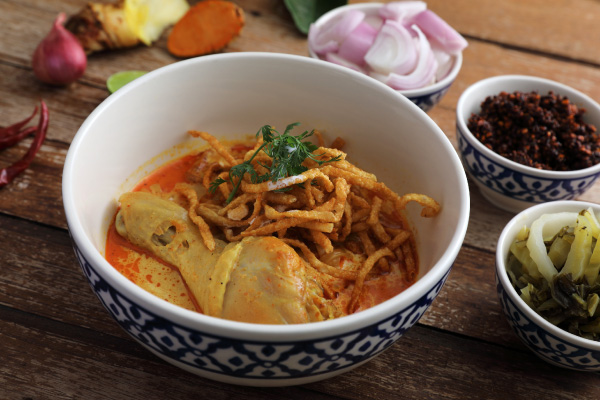
Best known in: Northern Thailand, especially Chiang Mai and Chiang Rai
Khao soi is the north in a bowl. Soft egg noodles sit in a golden coconut curry broth, rich but not heavy, fragrant with turmeric, coriander seed and a gentle, building warmth of dried chilli. On top comes a tangle of the same noodles, deep-fried until crisp, so every mouthful mixes silky and crunchy. Alongside, you'll find small dishes of pickled mustard greens, sliced shallots, a wedge of lime and a spoonful of roasted chilli paste, so you can tune the bowl exactly to your taste: sharper, sweeter or hotter.
Its roots run north, beyond Thailand's borders. Khao soi is closely linked to the Chin Haw, Chinese Muslim traders from Yunnan who travelled the caravan routes into northern Thailand, Laos and Myanmar. That heritage still shows: the classic versions are made with chicken or beef rather than pork, and some of Chiang Mai's best-known bowls are served near the city's mosques. After grinding out a tough morning in the mountains, nothing hits the spot quite like settling in for a hearty bowl of carbs and rich broth to replenish those spent legs.
2. Massaman Curry (แกงมัสมั่น, Kaeng Massaman)
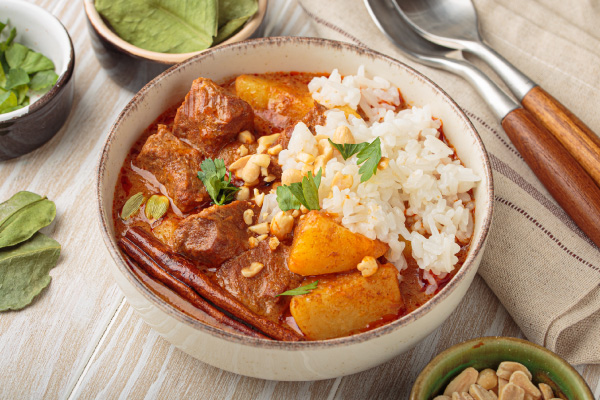
Best known in: All over Thailand, with roots in the central and southern regions
If most Thai curries are bright and fiery, massaman is warm and round. It's mild, slightly sweet and deeply aromatic, built on spices you might not expect in a Thai kitchen: cardamom, cinnamon, cloves, nutmeg and cumin. Tender chunks of beef or chicken simmer slowly with potatoes, onions and roasted peanuts in coconut milk, with a little tamarind and palm sugar to balance the sweet, sour and salty. It's the kind of dish that tastes even better the next day.
That spice box tells the story. Massaman is widely believed to trace back to the 17th century, when Persian and other Muslim merchants traded at the royal court of Ayutthaya, bringing their spices and cooking with them. Many believe the name itself comes from an old word for "Muslim". The curry was later celebrated in a famous poem attributed to King Rama II, which praised it so highly that anyone who tasted it would long for its maker. Centuries on, it remains one of Thailand's most loved dishes.
3.Boat Noodles (ก๋วยเตี๋ยวเรือ, Kuaitiao Ruea)
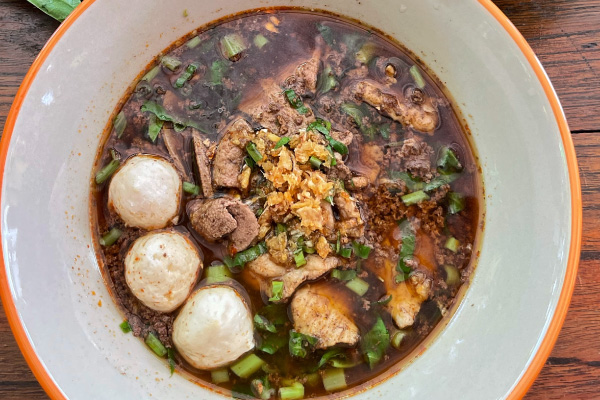
Best known in: Central Thailand, especially around Bangkok and Ayutthaya
Boat noodles are traditionally served in small, bite-sized portions. The dark, rich broth is infused with star anise, cinnamon, and a splash of pork or beef blood that imparts its signature depth. Each bowl features thin rice noodles, sliced meat, meatballs, morning glory, and crispy pork crackling, finished with fresh basil and a touch of chili. It is customary to order multiple bowls at a time, stacking the empty dishes at the table as you enjoy the meal.
The name is literal. For generations, central Thailand's waterways were its roads, and vendors paddled small boats along the canals of Rangsit and Ayutthaya, cooking noodles to order from pots on board. Serving small portions kept the hot broth from spilling as the boats rocked. Most boat noodles are now sold on dry land, but the little bowls, and the tradition of stacking them high, have stuck.
4.Som Tum (ส้มตำ, Papaya Salad)
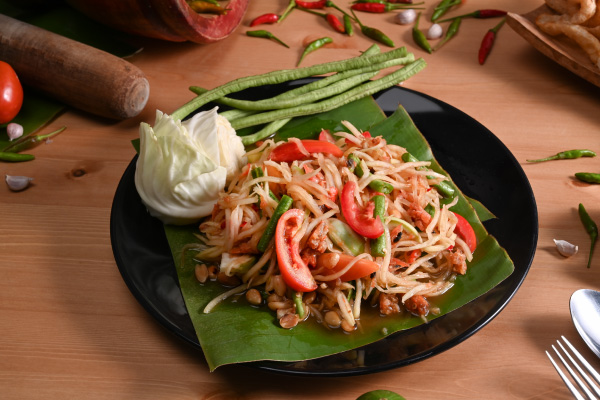
Best known in: Everywhere, but it's the pride of Isan, the northeast
You'll often hear Som Tum before you see it: the steady pok-pok-pok of a wooden pestle in a clay mortar. Shredded green papaya is pounded with garlic, fresh chillies, lime juice, fish sauce, palm sugar, cherry tomatoes and long beans until the flavours bruise together. The result is crunchy, fresh and fiercely bright, sour, salty, sweet and hot all at once. Order it "Thai style" for a sweeter version with peanuts and dried shrimp, or try the Isan and Lao style with Pla Ra, a pungent fermented fish sauce, for something funkier and more intense.
The name simply describes the dish: Som means sour and Tum means to pound. Som Tum comes from the Lao-speaking northeast and neighbouring Laos, where it's eaten with sticky rice and grilled chicken (Gai Yang). Interestingly, two of its key ingredients, papaya and chilli, originally came from the Americas, carried to Southeast Asia by traders centuries ago. Today it's one of the most popular dishes in the country, found literally everywhere across Thailand—from roadside stalls to local markets—and there's hardly a village without a Som Tum vendor.
5.Foi Thong (ฝอยทอง, Golden Threads)
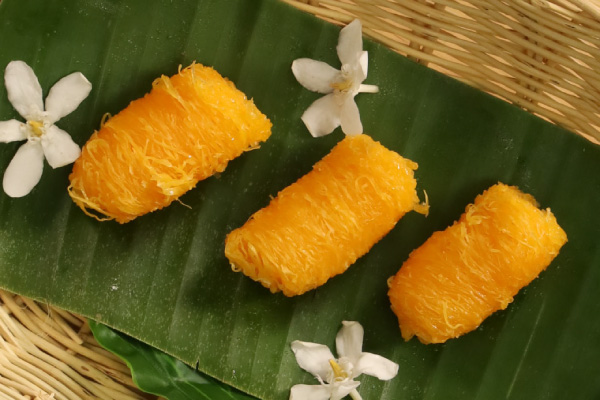
Photo: Rin Khanom Thai
Best known in: Bakeries, markets and dessert stalls nationwide, and at Thai weddings
Resembling a nest of fine golden silk, Foi Thong is made by drizzling egg yolks into simmering jasmine-infused syrup. As the threads set, they are gathered and folded into delicate bundles. The result is an intensely sweet, rich treat with a soft, slightly chewy texture that melts on the tongue—making it a quick pick-me-up when your legs fade on an afternoon ride, or a delightful pairing with strong Thai coffee after a long day in the saddle.
The dessert is credited to Maria Guyomar de Pinha, a woman of Portuguese, Japanese, and Bengali descent who worked in the royal kitchens of Ayutthaya in the late 17th century. By adapting Portuguese egg-based sweets like fios de ovos to local ingredients, she birthed several of Thailand's cherished golden desserts. Today, Foi Thong symbolizes good fortune: Foi means "fine threads" and Thong means "gold," with the unbroken strands representing longevity and lasting love—making it a staple at Thai weddings. Taste Your Way Across Thailand
The best way to discover Thai food is to go looking for it: in markets, at family-run restaurants and at the roadside stalls that appear just when you need them most. On a SpiceRoads tour, meals are part of the adventure, and our guides know exactly where to find the best bowl in town. Hungry for more?
Explore our Thailand cycling tours here


