


A few weeks ago, Camilo, our Latin America Product Manager, was so thrilled to wrap up the successful inaugural departure of our new Riding Ecuador’s Avenue of Volcanoes trip, traversing Ecuador’s incredible Avenue of Volcanoes stretching between Cotopaxi and Chimborazo across breathtaking altitudes of 3,500–4,000 m.
It was an unforgettable journey by bike, riding past the mesmerising Quilotoa crater lake, encountering remote indigenous mountain communities, and exploring a handful of tucked-away highland towns — spending the week, as one rider put it, “cycling through the Ecuadorian Andes high above the clouds.” Here are some of the stats from this adventure:
Altitudes:
3,500–4,000 mTerrain:
Cobblestone, dirt roads, trails and bikes-only singletrackHighlights:
Cotopaxi National Park, Trans-Ecuadorian Bikepacking Route, Quilotoa, Chimborazo descent, descent to BañosBikes:
E-bikes and traditional bikesSo, Why Cycle Ecuador's Andes?
Cycling the Andes places you directly in the heart of the landscape and local culture rather than watching it drift past a bus window. Nestled high in the Andean range, Ecuador serves up some pretty dramatic altitudes and intensely rewarding climbs, with some of the most incredible panoramic mountain vistas we’ve ever laid eyes across, rare páramo ecosystems, and vibrant indigenous hamlets tucked away in the clouds.
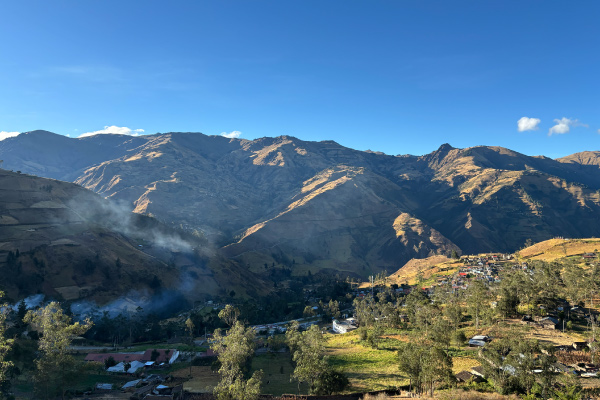
Up close on two wheels, every pedal stroke lets you truly absorb the spirit, flavors, and rhythms of the highlands in this destination.
And, what exactly is the Avenue of Volcanoes?
Named by the famous German explorer and naturalist Alexander von Humboldt, the Avenue of Volcanoes is a breathtaking, high-altitude stretch of the Ecuadorian Andes that packs one of the highest densities of majestic volcanic peaks on the planet into a surprisingly compact region.
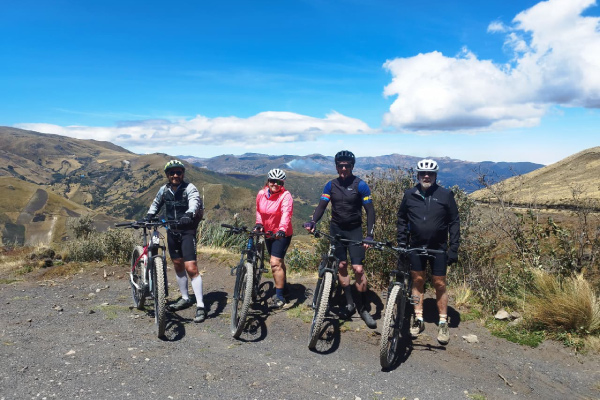
Our route threaded right between the towering giants of Cotopaxi and Chimborazo, winding past the surreal, turquoise waters of the Quilotoa crater lake and offering magnificent, sweeping views of Cayambe along the way.
What were the highlights of our inaugural departure?
Four standout experiences truly defined the spirit of the trip: pedaling into the vast, otherworldly landscapes of Cotopaxi National Park; traversing the remote heart of the high Andes along the rugged Trans-Ecuadorian Bikepacking Route; tackling the exhilarating, high-altitude descent down the flanks of Chimborazo; and plunging from chilly mountain heights into lush cloud forest on the thrilling drop down to Baños.
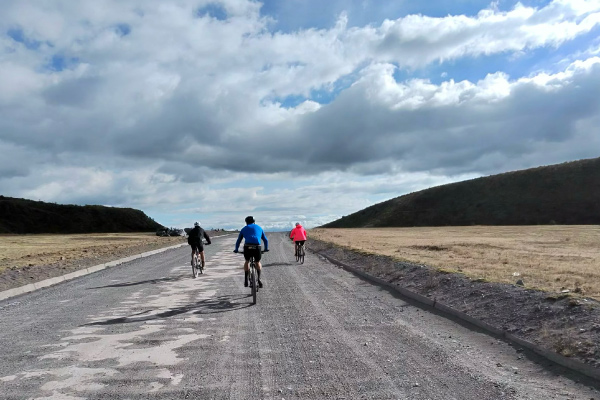
Riding Into Cotopaxi National Park
We left Quito by bus for the Santa Rita Ecological Reserve, where we started our climb into Cotopaxi National Park itself. The trip opens with the páramo, the high Andean grassland found only in the Andean countries — and here in the park it feels surreal. Conical hills of every size rise from the plain like miniature volcanoes, cut by canyons and drifting mist, with a unique vegetation holding on in the thin air. It's the kind of landscape that seems to belong to another planet.
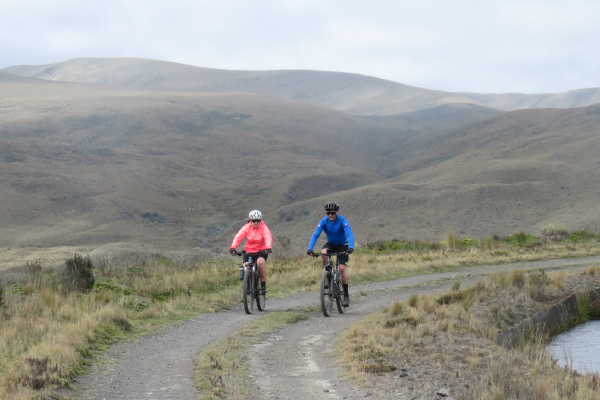
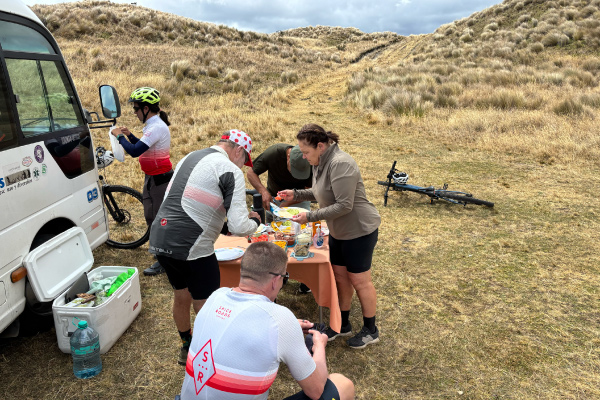
Halfway through the ride we stopped for a picnic lunch — one of the things our guests enjoyed most on this trip: fresh food in the middle of nowhere, with time to feel the conditions of the páramo and simply take in the view.
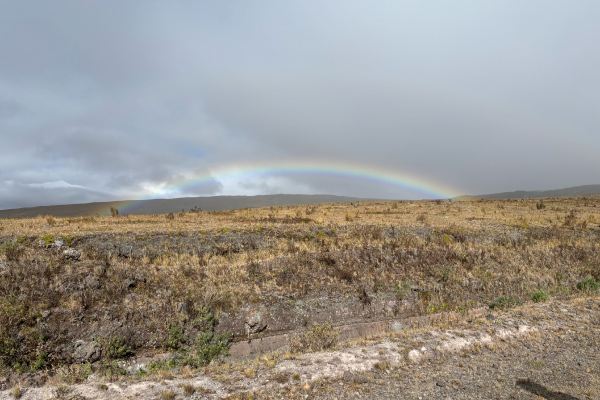
Cotopaxi, one of the world's highest active volcanoes at 5,897 m, only reveals itself between the clouds for brief moments, so you have to stay alert — at any time the giant can appear right in front of you. Just before we left the park, the day gave us a spectacular rainbow right beside the volcano.
Into the Remote Andes on the Trans-Ecuadorian Bikepacking Route
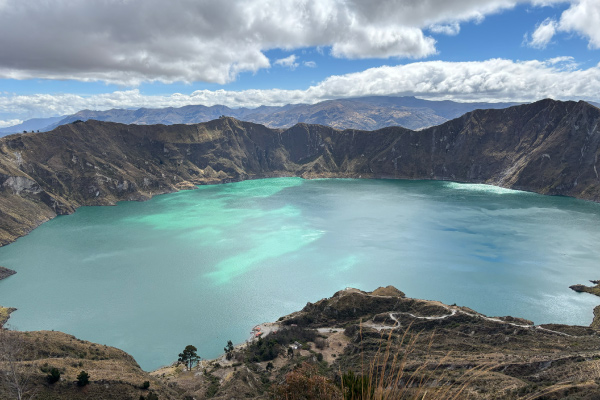
Much of our route followed the Trans-Ecuadorian Bikepacking Route, and this is where the trip felt truly remote — “as remote as it gets,” in the words of one of our guests. Quilotoa, a water-filled volcanic crater with a turquoise lagoon considered sacred by local communities, is the famous stop.
But the real magic was in getting to places like Angamarca and Salinas: towns with no famous landmarks, reached by crossing the Andes on climbs that touch 4,000 m and descents over every kind of terrain, through páramo and past grazing llamas, every now and then crossing a small community where a cyclist, or a tourist of any kind, is a rare sight.
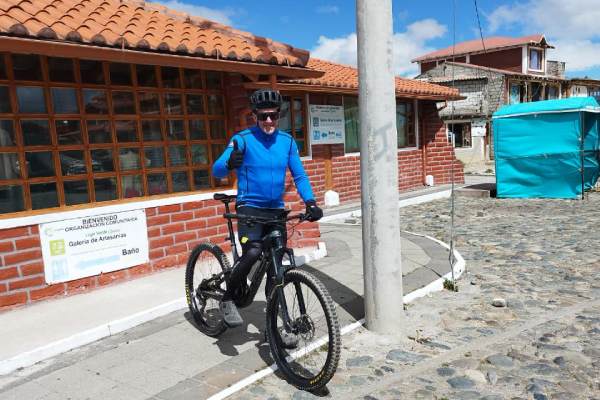
“Another amazing day in the Ecuadorian Andes Avenue of Volcanoes, riding at altitude from 3,000–4,000 m. Spectacular views,” one guest wrote at the end of one of these days.
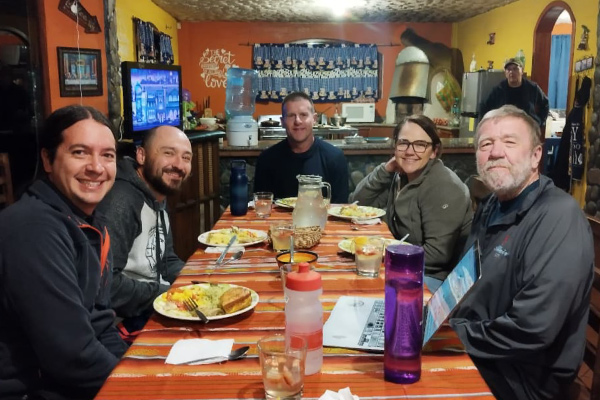
This is what makes travelling by bike special: the magic isn't in the highlight or the photo, but in the story — in arriving at a town in the middle of nowhere and spending the night in a simple hotel. Our guests loved that simplicity: a return to the basics that made them feel closer to everyday Latin American life. The food matched it — always fresh, natural and unpretentious, home cooking that was so flavourful no one reached for the ají, because adding hot sauce would only have masked it.
And the trip strikes a good balance, pairing these simple local stays with some very comfortable hotels along the way.
Descending From Chimborazo
Chimborazo is Ecuador's highest peak at over 6,000 metres ASL and, because of the equatorial bulge, it’s also the farthest point on Earth from the planet’s centre — and so, in a sense, closest to the sun. Starting at the base of this volcano, on barren, rock-strewn tundra — an almost lunar-like landscape — in thin, cold air, with the mountain looming close enough to feel its scale. We began descending on a trail built exclusively for bikes, with the volcano at our backs.
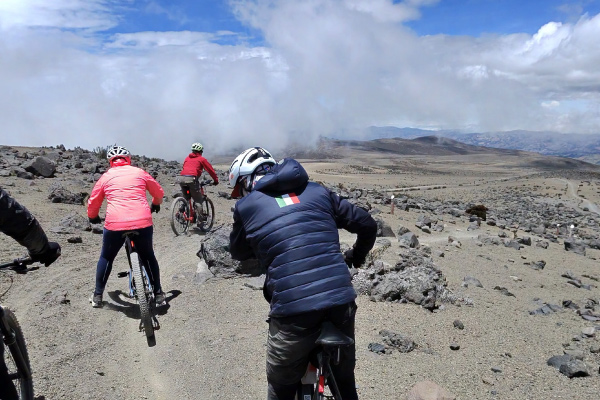
It's a somewhat technical descent, but still approachable enough for beginners wanting to venture out of their comfort zones — with no risk of a cliff edge beside you. The trail then wraps almost around the base of the volcano until, finally, Chimborazo stands right in front of us — another one of Latin America's giants, which stayed in view for much of the ride.
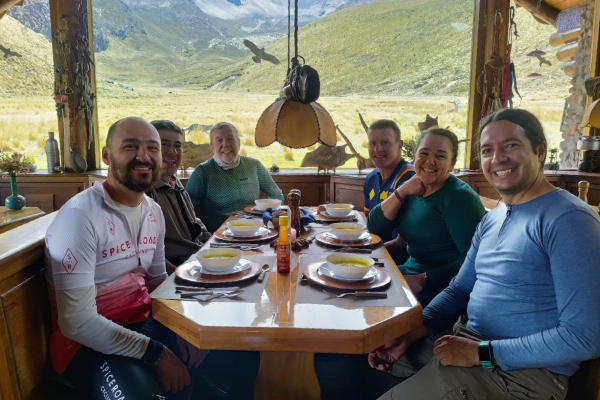
We had lunch at the Chimborazo Lodge, located at around 4,000 m, built by Ecuadorian mountaineer Marco Cruz for the countless climbers who’ve been heading to this giant's summit for decades. The lodge itself surprised us with its warmth, excellent service and variety of fresh food, even at such high and remote altitudes. From there we kept descending over different types of terrain — a perfect day for fans of slightly more technical riding, and for everyone else a chance to learn and push their limits.
Gradually reaching lower ground, plentiful crops and greener landscapes appeared, before arriving at Hacienda La Andaluza, one of this region's most emblematic haciendas.
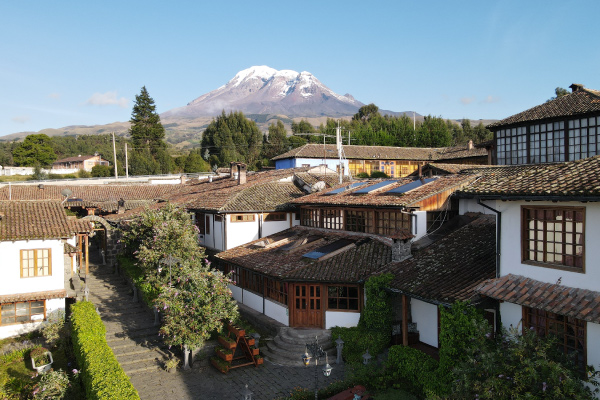
Dating back to 1555, the estate has long been transformed into a very comfortable museum hotel, filled with intriguing colonial antiques — a very spectacular place to spend the night.
Baños: From Páramo to Cloud Forests
On the descent to Baños, the ride brought a complete change of ecosystems. Leaving the open páramo behind, we dropped into cloud forest as our route edged closer to the Amazon — the landscape much greener, the air warmer (and more humid).
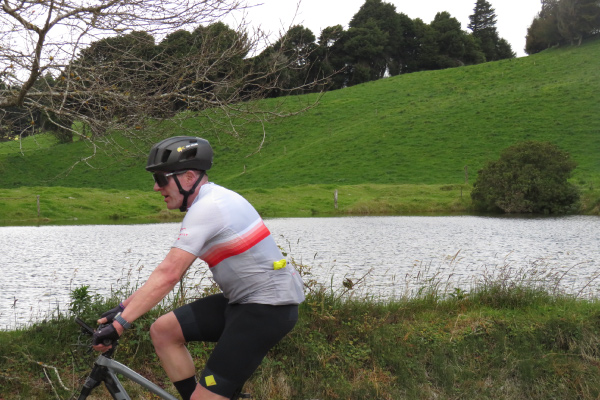
It was the final proof of something one rider mentioned: this trip shows the region exceptionally well, from volcanoes and páramo to remote communities, farmland and cloud forest.
How Hard is This Tour?
This is a demanding high-altitude tour: most of the riding happens between 3,500 and 4,000 m, with roughly 35–40% less oxygen than at sea level — or, as one rider joked, “this is the new sea level.” Long climbs over cobblestone paths and dirt roads are tough even for decently fit riders unused to these kinds of elevations, and the bike you choose really does shape how it feels.
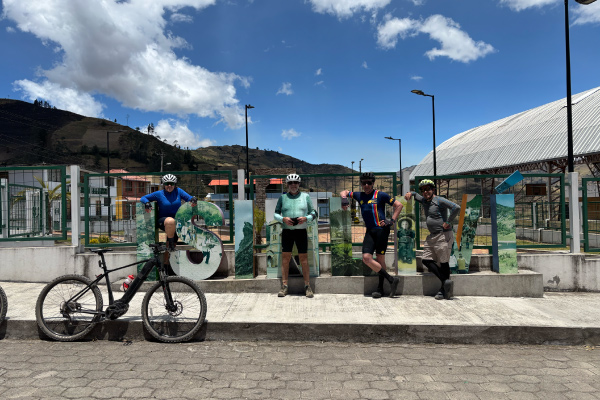
On e-bikes, pedal assist flattens the effort curve, so you aren't fighting for every metre — you can relax more, look up and soak in the beauty of where you are; we found ourselves constantly gazing at Cotopaxi's snow-capped cone appearing through the clouds. The payoff isn't just finishing each day, but arriving with enough left in the tank to enjoy being there.
E-Bikes or Traditional Bikes?
While both options follow the exact same route, the key difference lies in the level of exertion required. A traditional bike delivers the ultimate physical challenge of riding through the Andes, whereas an e-bike smooths out the high-altitude effort, allowing you to conserve energy for taking in the views, connecting with local communities, and enjoying the cuisine.
This makes mixed groups seamless—on our inaugural departure, three riders chose e-bikes while one opted for a traditional bike.
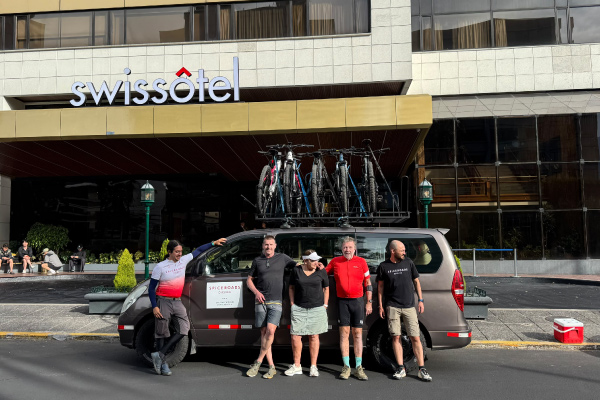
E-bikes also make it much easier for couples, families and friends to travel together, with everyone enjoying the trip rather than only the fittest members of the group.
Ready to Ride Ecuador and Latin America?
Ecuador’s Avenue of Volcanoes gave us an unparalleled mix of high-altitude adventures, take-your-breath-away landscapes, and a chance to experience rich Andean culture. As we continue to expand our journeys across Latin America, more incredible cycling routes await.
Check out our upcoming departure dates for Riding Ecuador’s Avenue of Volcanoes or explore our full range of cycle tours to plan your next epic adventure on two wheels!


