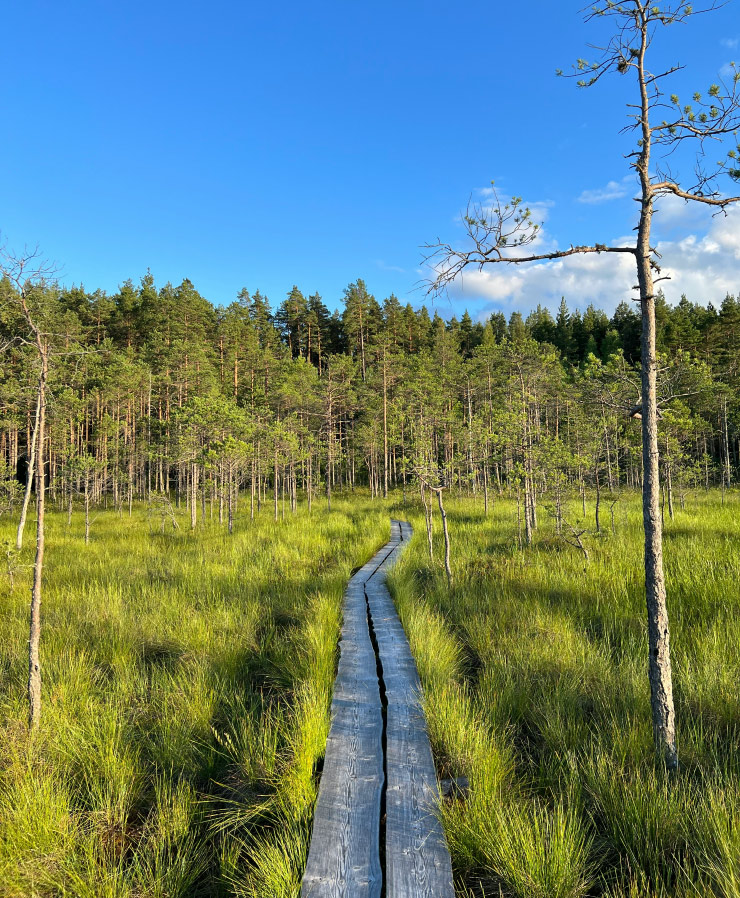
Estonia is a digital society with a medieval soul: a nation where hyper-modern innovation exists alongside some of the most pristine, untouched wilderness in Europe. As the most northerly of the Baltic states, it shares a deep linguistic and maritime connection with its Finnish neighbours, reflected in its clean-lined architecture and unhurried pace of life. For the cyclist, Estonia is a landscape of profound quietude, defined by over 2,000 islands, ancient peat bogs, and vast pine forests that cover half the country. The air is remarkably pure, carrying the scent of juniper and Baltic brine, while the light has a sharp, northern clarity that remains late into the summer evenings.

The defining experience of Estonian cycling is found in its western archipelago, particularly on the islands of Saaremaa and Hiiumaa. These are flat, sun-drenched havens where the ferry is simply a natural extension of the cycle path. Riding here is a journey through a bygone era: the routes wind past traditional wooden windmills, thatched-roof cottages, and medieval stone churches. The terrain is exceptionally gentle, making it the premier destination for those who seek a rhythmic, stress-free ride through a UNESCO Biosphere Reserve. It is a place where the traffic is non-existent and the only sounds are the hum of your tyres on the tarmac and the wind through the juniper bushes.

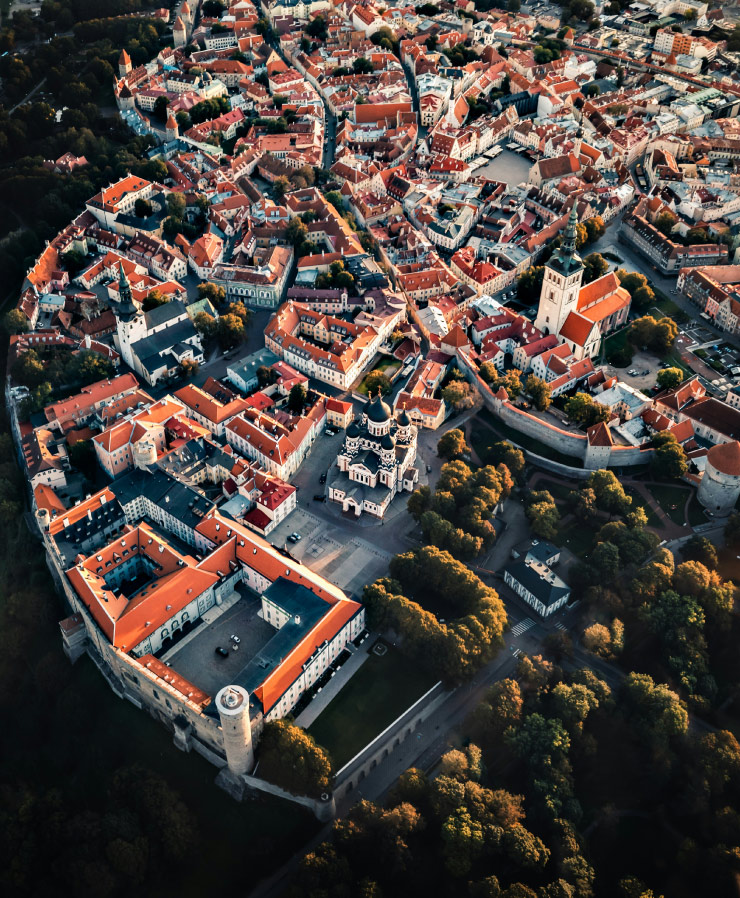
Beyond the islands, the Estonian mainland offers a fascinating contrast between its high-tech urban centres and its primordial interior. The capital, Tallinn, possesses one of the best-preserved medieval old towns in the world, yet it is also the heart of the world’s most digitally advanced society. For the cyclist, this means a "seamless" travel experience where every detail is managed with Nordic precision. As you move away from the cobblestone streets, you enter a world of vast, silent forests and dramatic coastal cliffs. It is a landscape that feels both ancient and remarkably forward-looking, offering a sense of space and liberty that is increasingly rare on the continent.

Did you know? The Kaali field on the island of Saaremaa is home to the most accessible meteorite craters in Europe. Formed around 3,500 years ago by a cosmic impact, the site features a massive central crater that was considered a sacred lake by ancient Baltic tribes and remains one of the rarest geological wonders in Eurasia.
We can tailor make your adventure exactly how you want it. Whether it's tweaking an existing itinerary, booking a standard tour on a different date, or creating your own unique one!
PLAN YOUR ADVENTURET.T.T. Tour Operator No. 14/02179 ATTA: 02354 Privacy Policy