


Cycling through Southeast Asia’s tropics provides the backdrop for our most beloved and longest-running biking tours, but the heat and humidity can be formidable for the uninitiated. Tackling 35°C temperatures and 80% humidity are challenges that will humble even the most seasoned riders.
In temperate climates, sweat evaporates to cool our skin. But in the high humidity of the tropics, this doesn't happen as effectively. Instead, moisture lingers on our skin as sweat, which causes our core temperature to rise.
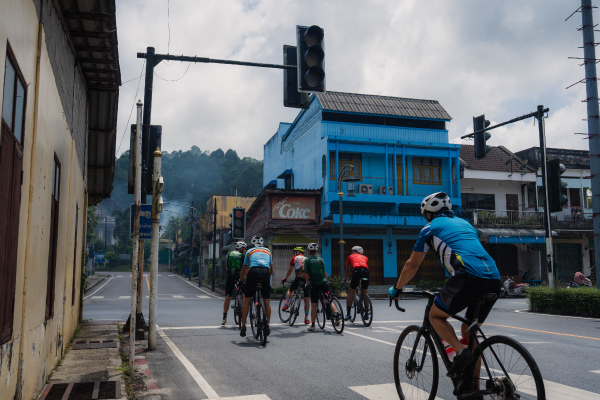
To cope, our hearts will work harder to push blood to the skin and shed heat, which raises our heart rate up to 10–20 beats higher than usual. Because of this, aerobic output naturally takes a dip and our bodies start managing two jobs at once: physical performance and cooling down our body.
It sounds a bit intense, but don't worry—your body is remarkably good at adjusting. After a couple of days, you’ll find your groove and get used to the heat, even on the tougher climbs. Just take it easy, give yourself time to adapt, and listen to what your body is telling you. If you need to dial it back, just let our guides know and go for it—you know your limits better than anyone.
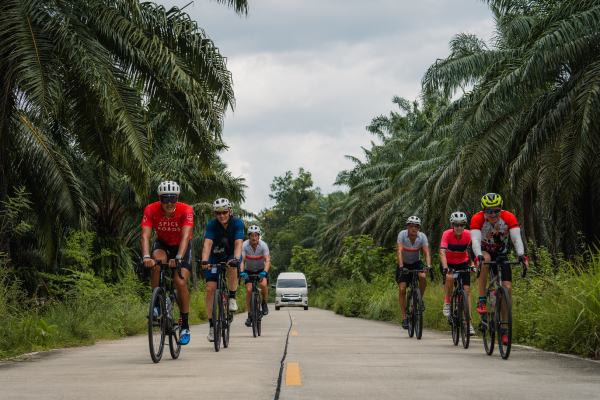
Our guides are experts at managing and accommodating everyone’s pace, ensuring you can relax and focus on enjoying the adventure.
STAY AHEAD OF DEHYDRATION
The golden rule of cycling in the tropics? Never wait until you’re thirsty. By the time you feel that urge, you’re likely already slipping into dehydration. It’s far more effective to start your ride well-hydrated by drinking consistently the day before, rather than trying to play catch-up once you’re on the road.
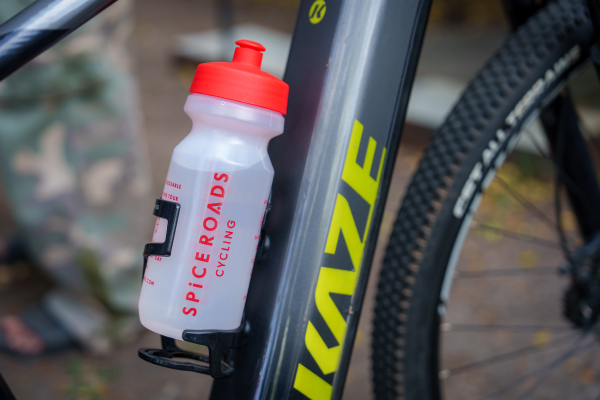
Staying ahead of the curve is essential here. Since you’ll be sweating quite a bit, your body burns through sodium quickly, making it tougher to hold onto fluids. A simple fix? Add an electrolyte sachet into your water bottle—it helps you actually absorb the hydration rather than just flushing it through your system. We keep our support vehicles well-stocked, so never hesitate to ask one of our guides for a refill if you're running low.
Pre-Ride:
Drink around 500–600ml of water an hour before riding begins.During the Ride:
Aim for 750ml to 1 litre of fluid per hour. It's easy to get distracted by the views, so a reminder on your phone or watch is a smart idea. Always keep one bottle of plain water topped up during the day — it's perfect for washing down food or cooling yourself off.You'll also need a steady supply of carbohydrates. Our trailing support vehicle is stocked with snacks and water for you at stops, and you'll also find plenty of great options at local markets along the way.
Post-Ride:
Hydration is just as important even after we finish riding. At the hotel, we should aim to replace whatever fluids were lost. Just keep sipping along throughout the afternoon into the evening and consider another sachet of electrolytes to retain fluids.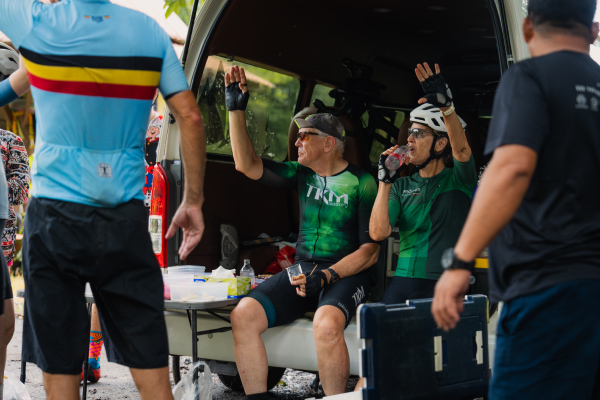
DRESS LIGHT AND AIRY
Lighter colors will keep you cooler since white jerseys reflect solar radiation, whereas darker shades absorb it. This temperature difference is surprisingly noticeable in direct sunlight.
Airflow is equally essential, so choosing jerseys with mesh panels across the back and underarms promotes ventilation and helps sweat evaporate faster.
We provide everyone with a SpiceRoads cycling jersey on each tour, but it's worth it to pack a few spares for your rotation while on tour with us.
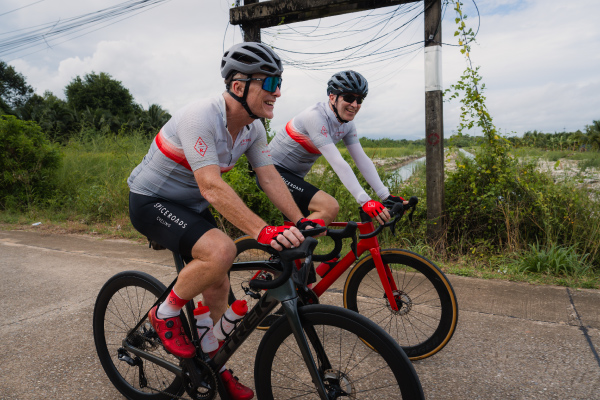
Make sure to pack padded cycling shorts as well—a quality chamois pad makes a huge difference as the miles pile on each day. And if you like wearing a base layer, go for an ultra-light, moisture-wicking option. This is a game-changer because when a jersey becomes completely soaked with sweat, it loses its ability to breathe and ventilate; a good base layer pulls moisture away from your skin, managing it before it saturates your jersey and keeping you feeling significantly cooler.
BRINGING YOUR OWN HELMET AND CYCLING SHOES?
Not all helmets are the same, so choose a well-ventilated design over a sleek aerodynamic one. These helmets direct air flow to keep your head dramatically cooler, especially if you pick a light color to reflect radiant heat. The same principle applies to cycling shoes: good ventilation, light colors, and a roomy toe box are all life savers. Heat causes our feet to swell, and numbness creeping in on a long stage is no fun at all.
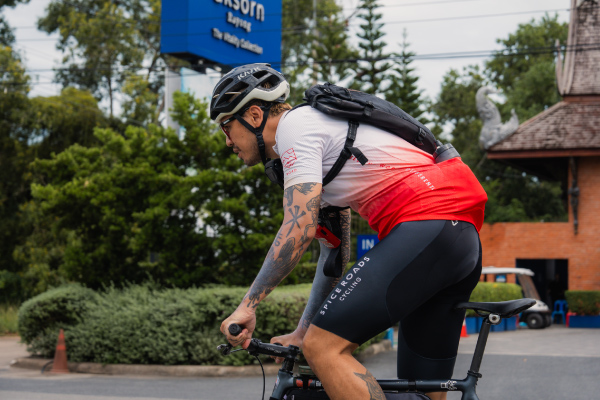
And don’t forget to finish your kit with a quality pair of sunglasses — a grade 3 dark tint is ideal for the intensity of the tropical sun. Cycling-specific ones tend to have inlets to direct airflow to cool our eyes and face.
At each destination, we provide quality helmets for travellers if you choose not to bring your own, but please note that we do not provide cycling-specific shoes.
DON’T SKIP OUT ON SADDLE HYGIENE
Hot and humid weather creates ideal conditions for saddle sores, friction, and skin infections but taking a few proactive steps will ensure a much more comfortable ride.
Pre-Ride:
Whenever possible, start the day with a shower and a clean pair of shorts before applying a generous amount of chamois cream if you have some handy. Think of chamois cream as a protective lubricant for cyclists; it reduces friction between your skin and the chamois pad of cycling shorts, which helps prevent chafing and sores during long days in the saddle.During the Ride:
Stand up on your pedals for 15 to 30 seconds every 10 to 15 minutes. This engages your glutes, quads, and core, restores blood flow, allows air to circulate, and gives your sit bones a well-deserved break—plus, it's a great chance to take in the views!Post-Ride:
As soon as you finish your ride, get out of your kit within 30 minutes. Staying in damp, sweaty cycling gear is a recipe for bacterial growth and skin irritation, so peel off those shorts and jump in the shower as soon as you can. Dry off thoroughly afterward to ensure no moisture lingers. Finally, rotate your shorts for the next day, ensuring each pair has plenty of time to dry out completely so they’re fresh for your next ride.
SUN PROTECTION IS KEY
While you're riding, the cooling breeze can mask how quickly the tropical sun affects your skin. By the time you feel it, sun damage has likely already occurred.
Apply a waterproof, broad-spectrum SPF 50 sunscreen at least 30 minutes before starting your ride – this ensures full absorption. Don't overlook commonly missed areas such as the back of your neck, ears, nose, tops of your feet, and the backs of your hands.
If your jersey has mesh panels, apply sunscreen underneath them as well, as mesh offers minimal UV protection.
Finally, carry a small tube in your jersey pocket and reapply every two hours, especially after heavy sweating. It’s a lightweight, essential habit that makes a significant difference.
For an extra layer of defense, consider wearing UV-protective arm sleeves. They are a fantastic way to shield your skin from the intense sun without the need for constant reapplication of sunscreen. Many riders find that high-quality, moisture-wicking sleeves actually help keep them cooler by promoting airflow, and they can be easily pulled down or removed if you want to soak up a bit of sun during a rest stop.
Saddle Up for Southeast Asia!
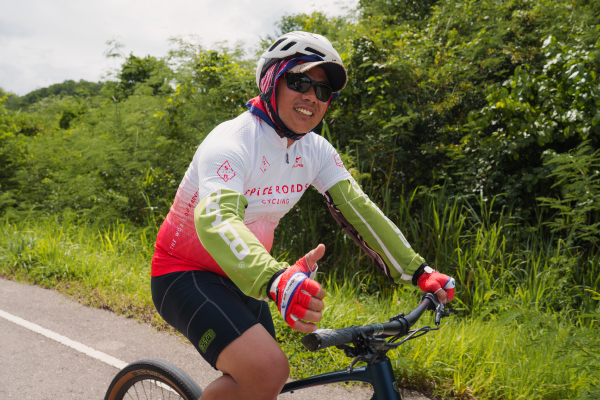
Booked for one of our Southeast Asian trips? Remember to ease into the first few days, stay ahead of your hydration, get your kit sorted, and look after yourself. Do that, and you’ll find a rhythm that’s uniquely yours—the kind of ride you won’t find anywhere else.
And don’t fight the heat. It’s part of the journey. It’s the reason those early morning starts feel electric, why a roadside coconut is more than just a snack, and why that post-ride shower feels like a victory. Embrace it. The best of the tropics is waiting in the bike saddle.


