Passports and Visas
Bolivia organizes entry requirements into three groups based on nationality. Travelers from most EU countries and Australia do not need a visa and receive a free entry stamp on arrival for an initial stay of 30 days, extendable up to 90 days at any immigration office in Bolivia. Travelers from the United Kingdom also fall into the visa-exempt category.
As of December 2025, US citizens no longer require a tourist visa for short tourism trips and may enter visa-free with a valid passport; however, it is strongly advisable to carry supporting documents such as proof of onward travel and hotel reservations. Canadian citizens are visa-exempt for tourism purposes. Citizens of certain countries (Group 2) must obtain a visa in advance at a Bolivian embassy or consulate. You can check your specific requirements using the official Bolivian migration tool
here. If you require a visa, please contact the nearest Bolivian embassy or consulate well in advance and do not leave it to the last minute.
All travelers visiting Bolivia are required to complete a pre-registration form (called SIGEMIG) before or upon arrival. This registers your accommodation details with the Bolivian migration authority. It is recommended to complete this online before departure. Please access the SIGEMIG registration form here. Keep a copy of your registration on your phone, as this may be requested by immigration officials.
Note: Visa policies for Bolivia can change at short notice. We strongly recommend verifying your entry requirements with the Bolivian embassy or consulate in your country before travel.
Health
Recommended vaccinations include Hepatitis A, typhoid, tetanus and polio. Yellow fever vaccination is strongly recommended if travelling to lowland regions such as the Amazon basin, and proof of vaccination may be required if arriving from a country with yellow fever risk. Malaria risk exists in rural areas below 2,500 meters, particularly in the north and east of the country; consult your doctor about appropriate precautions. Altitude sickness (known locally as soroche) is a very real consideration in Bolivia, as cities like La Paz sit above 3,600 meters. Allow yourself time to acclimatize upon arrival, stay well hydrated, avoid alcohol on your first days, and consider speaking to your doctor about preventive medication. See here for full CDC recommendations. Please speak to your doctor or physician for the most recent and personalized information.
Weather
Bolivia's climate varies dramatically depending on altitude and region. The Altiplano and Andean highlands — including La Paz, Potosí and the Salar de Uyuni — have two main seasons: a dry season running roughly from May to October, with cool, clear days and cold nights, and a rainy season from November to April. The dry season is the best time for cycling on the Altiplano and the salt flats. In the Yungas valleys and lower-altitude areas, the climate is subtropical and humid year-round. Regardless of the season, temperatures at high altitude can drop sharply at night, sometimes well below freezing on the salt flats. Warm layers, a windproof jacket and cold-weather cycling gear such as arm warmers and a gilet are essential. The strong UV radiation at altitude also demands quality sun cream and a head covering at all times while riding.
Food
Meals are included as per the itinerary where B = breakfast, L = lunch, D = dinner. Most meals are local and feature traditional Bolivian highland dishes, including hearty soups, rice-based plates and fresh produce from Andean markets. Salteñas — a baked, juicy Bolivian empanada — are a must-try morning snack. Any special dietary requirements can be catered for; please let us know at the time of booking. In remote areas, options may be limited, but we always do our best to accommodate your needs.
Drink
Keeping you completely hydrated at altitude is a top priority. Water, refreshments and soft drinks are included in the tour price while riding. Tap water in Bolivia is not safe to drink; bottled or purified water is recommended at all times. Soft drinks, alcoholic beverages and other beverages during meals are NOT included. Beer and other alcoholic drinks are available in most towns but are not included. Note that alcohol affects the body more strongly at altitude — drink with extra caution.
Solo Travelers
SpiceRoads does not require you to pay a surcharge for travelling alone. We will arrange for you to share accommodation with another traveler of the same gender and if we cannot match you up we will provide a single room at no extra charge. If you prefer not to share, a single supplement is payable to guarantee your own room. The cost of the single supplement is listed above.
Extra Expenses
We recommend that you set aside a few extra US Dollars for possible incidentals. It is always wise to carry some cash, as ATMs can be scarce or unreliable outside of major cities. Even in tourist towns like Uyuni, ATMs can run out of cash or be temporarily out of service. This will save you a lot of unnecessary worry. It is also customary to tip local tour guides and drivers; the amount is at your discretion and should reflect the level of service received.
Money
The official currency of Bolivia is the Boliviano (BOB), divided into 100 centavos. Banknotes come in denominations of 10, 20, 50, 100 and 200 bolivianos, and coins in 10, 20 and 50 centavos, and 1, 2 and 5 bolivianos. ATMs are widely available in La Paz and larger cities, but can be difficult or impossible to find in smaller towns and rural areas — plan accordingly and carry sufficient cash when heading into remote terrain. US dollars are generally accepted in larger cities and can be exchanged at official casas de cambio (exchange bureaux). Ensure that any US dollar bills you bring are in pristine condition, as torn, crumpled or marked notes are routinely refused.
Be Aware
Bolivia, like many countries, has areas where petty crime can occur, particularly in larger cities such as La Paz. Pickpocketing, bag snatching and theft in crowded markets or on public transport are the most common risks. Use only reputable, radio-dispatched taxis and avoid hailing cabs off the street. Do not walk alone at night, and store valuables securely. Express kidnappings, in which victims are forced to withdraw money from ATMs, have been reported in La Paz, though they remain infrequent. Stay vigilant, be discreet with electronics and cash, and ask your guide or hotel for up-to-date local safety advice.


 SpiceRoads jersey
 International flights


 MET Hotel
 Dinner
.jpg)
.jpg)
 Ride 50km
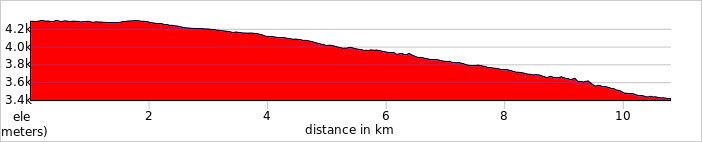
 +709m
+709m -1042m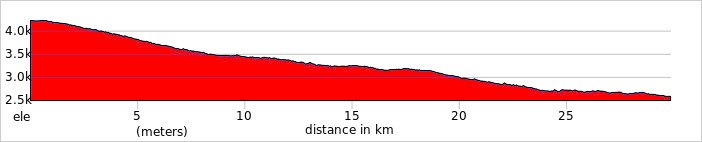
 twitter.com/spiceroads
 youtube.com/user/spiceroads
 instagram.com/spiceroads
 facebook.com/SpiceRoad


