Written by Camilo Ortega, Latin America Product Manager
Cycling the Andes
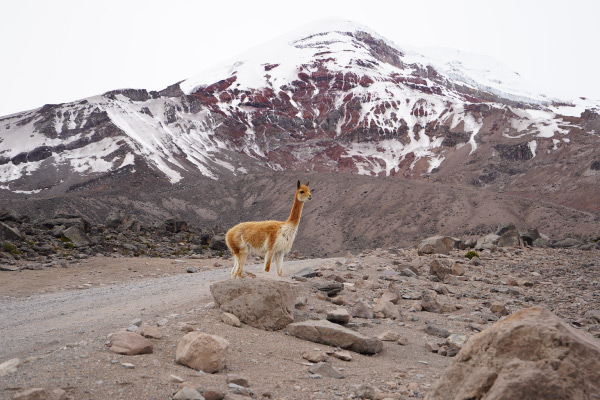
The Andes are the world's most varied cycling destination — seven countries, one mountain spine, and terrain that ranges from tropical rainforests and coffee highlands to salt deserts and snow-capped volcanoes, all rideable and all connected. Along the way, you ride through some of the most critical and emblematic ecosystems on the planet: the páramo, found nowhere else on Earth at elevations above 3,000m, the high Andean forest, a vast cloud forest draped in moss and silence, and further south the Valdivian temperate rainforest and the Patagonian steppe.
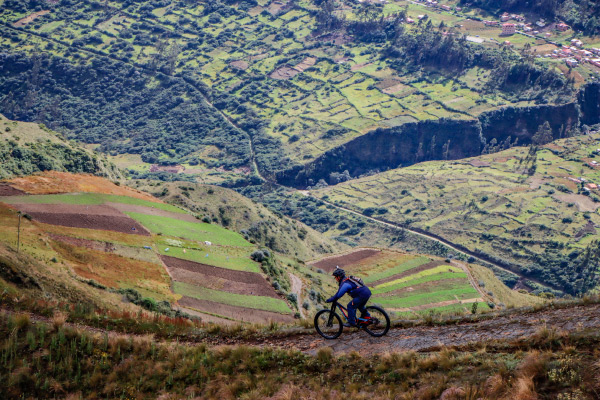
These ecosystems are home to an incredible concentration of biodiversity — thousands of bird species including the Andean condor, spectacled bears, pumas, tapirs, vicuñas, and countless reptiles and amphibians found nowhere else. But beyond biology, they’re living paintings — landscapes so immense that they’re difficult to photograph and definitely impossible to forget, places where the scale of the cordillera becomes something you feel in your legs and your lungs before you see it with your eyes.
This same range has been home to human civilisation for millennia, from the mighty Incas and their predecessors to the colonial cities built on their foundations, to modern metropolises like Bogotá at 2,600m, Quito at 2,850m, and La Paz at 3,650m — cities that sit high in the mountains and carry the weight of that history in every street.
Beyond the Riding
We are as diverse as the terrain we live in — indigenous communities, campesinos, market traders, miners, high-altitude farmers, and modern city dwellers, all living along the same mountain spine.
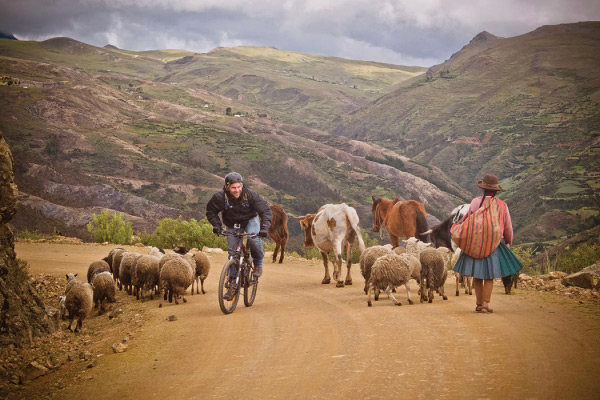
On a single day's ride through Peru you’ll pass through a Quechua-speaking village where the weekly market looks unchanged from five centuries ago, exchange nods with a campesino leading his mules up dirt tracks, and arrive by evening in a city with a thriving restaurant scene and a cycling culture unlike anywhere else in the world. In Colombia, that culture runs especially deep — this is the country that gave the world Egan Bernal and Nairo Quintana, riders who grew up climbing these same roads. In the south, Argentina and Chile open into gaucho country — a different pace, a different relationship with the land, but the same quiet pride.
What stays with most riders long after the climbing is done is not the altitude or the views. It’s the people: resilient, generous, and deeply connected to a mountain range that has shaped everything about our world in the Andes.
How difficult is Cycling in the Andes?
Cycling in the Andes is as challenging as we choose to make it — but it should be noted that the expected range of cycling difficulty is wider and more varied than almost anywhere else on Earth. Firstly, expect temperatures that swing from 25°C in the Colombian and Ecuadorian valleys to under 5°C at a 4,500m pass in Bolivia or Peru — sometimes on the same day. Pack for both.The terrain itself covers every discipline:
• Dirt “veredal” tracks connecting farms and villages with almost no traffic
• Technical single tracks carved into mountainsides
• Remote gravel roads threading through valleys and cloud forest
• Paved climbs among the longest in the world, some exceeding 60km of continuous ascent
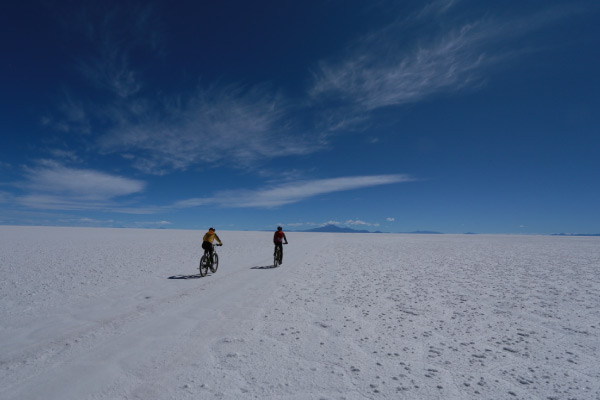
And then, almost as a footnote to all of it, Bolivia's salt flats — so white and vast and silent that they feel like something straight out of a dream. But the Andes truly does reward experienced cyclists — riders comfortable on varied terrain, capable of sustaining long climbs, and road cyclists who know how to share a mountain lane with traffic. Be prepared for the descents as much as the climbs: what goes up also comes down just as steeply.
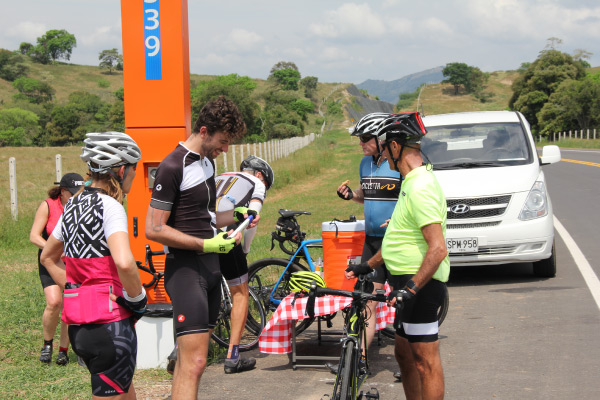
The Andes are demanding place to ride — and that’s precisely why we’ve put a lot of time and effort in connecting with local experts on the ground in every destination we operate, people who know these roads intimately, those who’ve ridden the quietest “veredal” tracks, locals who understand the terrain, the weather, and know the communities along the way.
Local knowledge is what makes every route more than just a ride: with well-placed transfers that keep our journey flowing, carefully chosen secondary roads with minimal traffic, the right bike for the right terrain. And for those who want to go further than their legs might be comfortable with, can opt for dedicated e-bike tours — we make the Andes by bike possible, on your own terms.
Hot Take: Is the Andes the World's Best Cycling Destination?
The Andes are, simply put, a paradise for every kind of cyclist — and for cross country and gravel riders, something closer to a promised land. No other mountain range offers such an alluring combination: an infinite network of quiet dirt roads, a landscape that reinvents itself every hundred kilometres, and a mountain spine so long that a lifetime of riding would barely scratch the surface. From Ecuador's volcanic corridor to the remote trails of Chilean Patagonia, every country brings its own chapter to the same story. But what makes the Andes truly accessible — not just admirable from a distance — is knowing how to move through them.That is what we do at SpiceRoads. Riding with local experts in every destination, following routes built from the inside out by people who grew up riding these roads every week, and creating the support infrastructure that make these amazing adventures possible – this is how we turn one of the world's most demanding cycling environments into one of its most rewarding journeys you’ll ever experience. Whatever bike you’re on — road, MTB, gravel, or e-bike — the Andes are waiting. And we know exactly how to take you there.