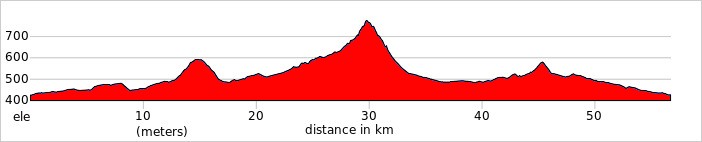
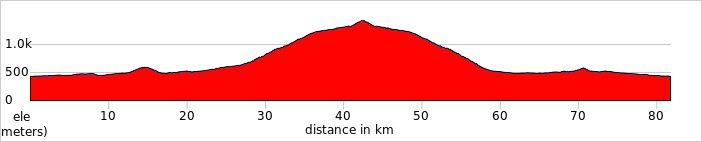
The tour begins with a morning group pickup in Bucharest or Brașov. We recommend arriving in either city the day before the tour begins to allow for a smooth and relaxed start. The transfer from Bucharest takes approximately four hours, while the transfer from Brașov is around one hour. If you are joining in Brașov, there is time to enjoy lunch in town before the transfer. Guests picked up in Bucharest make a short stop en route for snacks before continuing into rural Transylvania and the quiet Saxon village of Cincșor. On arrival, we settle into our accommodation and prepare for a short warm-up ride through the surrounding countryside, an easy introduction to the bikes and terrain. After the ride, there is time to relax before a trip briefing and our welcome dinner together.

The day begins directly from the hotel, rolling out through the Transylvanian countryside for a gentle warm-up before the road gradually begins to rise. After approximately 35 km of steady approach riding, the Transfăgărășan comes into view and the climb proper begins. The ascent to Bâlea Lake follows the legendary mountain road for roughly 25 km, climbing steadily to just over 2,000 metres above sea level. The gradient is sustained but consistent, allowing time to settle into a rhythm as the scenery becomes increasingly dramatic. As we gain height, the road opens into wide alpine curves with sweeping views across the rugged Făgăraș Mountains, often referred to as the Transylvanian Alps. At the summit, Bâlea Lake sits in a glacial basin surrounded by steep rock walls and high peaks. We pause here for lunch before regrouping for the long, flowing descent toward Cârțișoara. From there, we return to Cincșor by support vehicle, with a transfer of around 30 minutes, or continue riding back to the hotel for those who would like to extend the day. In the evening, we come together for dinner and time to unwind after a full day in the mountains.

After breakfast, we ride out into the Transylvanian Highlands on quiet country roads. The terrain is rolling rather than steep, offering a gentler day after the previous mountain climb. Early on, the route passes through the village of Cincu, centred around its fortified church, before continuing through open countryside with the Carpathian Mountains stretching across the horizon. The day unfolds along minor roads and through small villages, following sections of the Hârtibaciu River and moving through the Brașov–Sibiu–Sighișoara cultural triangle. The ride reflects the long-settled history of the region, shaped by Saxon communities and rural life. We arrive in Sighișoara around lunchtime and sit down together for lunch. The afternoon is then free to explore the historic centre at your own pace. One of Europe’s best-preserved medieval citadels and a UNESCO World Heritage site, Sighișoara remains a living town, with cobbled streets, towers, and layers of architecture dating back to the 12th century. In the evening, dinner is on your own, with plenty of restaurants and traditional taverns to choose from in the historic centre.

The ride begins directly from the hotel, following a scenic secondary road through the Hârtibaciu Valley. The terrain remains gently rolling as the route passes through Biertan, one of the most important Saxon villages in Transylvania, centred around its UNESCO-listed fortified church. Continuing through open countryside and small settlements, the day offers a strong sense of the region’s rural rhythm and long-settled history. As the ride approaches Sibiu, traffic increases slightly near the city. To avoid busier roads, we can transfer the final 25 kilometres or continue riding all the way to the hotel. Sibiu is an engaging place to spend the next two nights. Named European Capital of Culture in 2012, the city is known for its well-preserved Saxon heritage, elegant façades, and lively cultural scene. The compact historic centre is home to medieval walls and towers, museums such as the Brukenthal Museum, and a relaxed café culture that makes it easy to unwind and explore at your own pace. In the evening, we come together for dinner in the city.

The day begins with a steady climb from Sibiu toward Păltiniș, a historic mountain resort set high above the city. The ascent includes several sustained sections, rewarded by a classic mountain road and expansive views, before a long descent back toward Sibiu. The route leads directly to the Open Air Village Museum, one of the largest open-air ethnographic museums in Central and Eastern Europe. Set in forested grounds around two artificial lakes, the museum features more than 300 traditional houses, workshops, and rural buildings from across Romania, connected by over 10 kilometres of walking paths. There is time to explore the exhibits and enjoy lunch. After the visit, we return by bike to the same hotel in Sibiu. The remainder of the afternoon and evening is free to explore the city at your own pace and choose where to dine. A shorter riding option is available, and those who prefer a rest day can skip the ride entirely and enjoy Sibiu, saving energy for the following day’s longer stage.


The final riding day is the queen stage of the tour, centred on the Transalpina, Romania’s highest road and the most demanding climb of the week. Known locally as the King’s Road, this historic mountain pass cuts deep into the Carpathian Mountains, delivering a sustained and rewarding ascent on a well-engineered mountain road. A 20-minute transfer brings us from Sibiu to the start near Săliște, where rolling terrain offers a steady lead-in before the climb begins in earnest. The ascent gains height gradually, combining long steady sections with a few steeper ramps, eventually reaching Urdele Pass at 2,145 metres above sea level. As we climb, the scenery opens into wide alpine views and exposed high-mountain terrain. After cresting the pass, the route continues across a rolling plateau before a fast, flowing 20-kilometre descent into Novaci. From here, we transfer for around 30–40 minutes to our final overnight stop in Măldărești. In the evening, we come together for a farewell dinner, marking the end of the week’s riding.

After breakfast, the tour comes to an end. We arrange transfers according to onward travel plans, either to Sibiu International Airport or to Bucharest. If you would like to stay a little longer, it is possible to extend your time in Măldărești or nearby Horezu, known for its traditional pottery and listed as a UNESCO World Heritage site. Hotel extensions and private transfers can be arranged at additional cost. Let us know your plans and we’ll help organise the details.
Disclaimer: The adventure cycling tours we operate often go beyond the beaten track, and the countries where we ride are not always predictable. Due to these reasons, it is occasionally necessary to reroute or update itineraries. Our guarantee is that we will not change a trip unless for safety or to improve it. Our listed hotels are always accurate at the time of writing, but should we have to change any hotel, it will always be for a similar or better one.


We ride a total of 485 km over six cycling days, including five full riding days plus a short warm-up ride at the start of the tour. Total elevation gain is just under 7,000 metres, spread across varied terrain and carefully paced days. Daily distances generally range between 70 and 100 km, with elevation gains of 500 to 1,800 metres. The most demanding stage is the ascent of the Transalpina, with up to 139 km of riding and approximately 3,000 metres of climbing. Other days balance sustained climbs with rolling sections, creating clear variation across the week. The itinerary includes a mix of point-to-point stages and loop rides, adding variety to both terrain and daily rhythm. The route moves through the Brașov–Sibiu–Sighișoara cultural triangle, linking some of Transylvania’s most distinctive historic towns. Cultural highlights along the way include Biertan, one of the region’s most important Saxon villages, centred around its UNESCO-listed fortified church, as well as a visit to Sibiu Open Air Village Museum, one of the largest open-air ethnographic museums in Central and Eastern Europe. Most days include planned stops for cultural visits, along with regular pauses to regroup, refuel, and take in the surroundings. The trip is fully supported, and your guide’s expert knowledge of the area and terrain means that you always know what is coming up in terms of distance and difficulty. This makes a tremendous difference, as does the constant supply of water and refreshments along the way.
Suitability: This tour is best suited to intermediate and advanced road cyclists who ride regularly and maintain a strong level of general fitness. Over the course of the journey, you cover approximately 500 km with just under 7,000 metres of total elevation gain, including several long mountain climbs. You should be comfortable riding longer distances on consecutive days, pacing yourself on sustained climbs, and riding as part of a group on varied terrain, from rolling countryside to high mountain roads. While the days are carefully structured, with regular regrouping and cultural stops, this is a physically demanding itinerary that rewards preparation and steady endurance. Throughout the tour, the support vehicle is always nearby to offer refuge to any weary cyclists.
Biking Conditions: The route follows a mix of quiet minor roads, rural country lanes, and one national road on the Transalpina. Most of the riding takes place on paved roads suited to road bikes, linking villages, farmland, and rolling countryside. Road surfaces vary, reflecting the rural character of the region, but are generally in good condition. Traffic levels are typically low, particularly outside towns, though riding through villages and small urban areas can be busier at times. Across the week, the terrain alternates between rolling sections and longer climbs, with open stretches that allow the group to find a steady rhythm. Regrouping points are built into each day, and the guide manages pacing and positioning to support smooth group riding as conditions change. We generally ride rain or shine, but based on the guide’s discretion or your level of comfort, modifications to the planned route can be made. It’s all part of the adventure!
Accommodation: Stays are at a comfortable 3–4 star level and reflect the character of the regions we travel through. Accommodation includes restored medieval guesthouses, traditional rural hotels, and small heritage properties, often family-run, with select nights in historic settings where available. Rooms are clean, comfortable, and well-maintained, though standards and layouts may vary from place to place, particularly in rural areas. Some older properties, while full of character, may show signs of age, and service can be more relaxed than you might be accustomed to. For larger groups, we may use more than one accommodation in the same location, and in the case of limited availability, we may substitute an alternative property of a similar standard to that listed in the itinerary.
The tour begins with a morning group pickup in Bucharest or Brașov. We recommend arriving in either city the day before the tour begins to allow for a smooth and relaxed start. The transfer from Bucharest takes approximately four hours, while the transfer from Brașov is around one hour. If you are joining in Brașov, there is time to enjoy lunch in town before the transfer. Guests picked up in Bucharest make a short stop en route for snacks before continuing into rural Transylvania and the quiet Saxon village of Cincșor. On arrival, we settle into our accommodation and prepare for a short warm-up ride through the surrounding countryside, an easy introduction to the bikes and terrain. After the ride, there is time to relax before a trip briefing and our welcome dinner together.

The day begins directly from the hotel, rolling out through the Transylvanian countryside for a gentle warm-up before the road gradually begins to rise. After approximately 35 km of steady approach riding, the Transfăgărășan comes into view and the climb proper begins. The ascent to Bâlea Lake follows the legendary mountain road for roughly 25 km, climbing steadily to just over 2,000 metres above sea level. The gradient is sustained but consistent, allowing time to settle into a rhythm as the scenery becomes increasingly dramatic. As we gain height, the road opens into wide alpine curves with sweeping views across the rugged Făgăraș Mountains, often referred to as the Transylvanian Alps. At the summit, Bâlea Lake sits in a glacial basin surrounded by steep rock walls and high peaks. We pause here for lunch before regrouping for the long, flowing descent toward Cârțișoara. From there, we return to Cincșor by support vehicle, with a transfer of around 30 minutes, or continue riding back to the hotel for those who would like to extend the day. In the evening, we come together for dinner and time to unwind after a full day in the mountains.

After breakfast, we ride out into the Transylvanian Highlands on quiet country roads. The terrain is rolling rather than steep, offering a gentler day after the previous mountain climb. Early on, the route passes through the village of Cincu, centred around its fortified church, before continuing through open countryside with the Carpathian Mountains stretching across the horizon. The day unfolds along minor roads and through small villages, following sections of the Hârtibaciu River and moving through the Brașov–Sibiu–Sighișoara cultural triangle. The ride reflects the long-settled history of the region, shaped by Saxon communities and rural life. We arrive in Sighișoara around lunchtime and sit down together for lunch. The afternoon is then free to explore the historic centre at your own pace. One of Europe’s best-preserved medieval citadels and a UNESCO World Heritage site, Sighișoara remains a living town, with cobbled streets, towers, and layers of architecture dating back to the 12th century. In the evening, dinner is on your own, with plenty of restaurants and traditional taverns to choose from in the historic centre.

The ride begins directly from the hotel, following a scenic secondary road through the Hârtibaciu Valley. The terrain remains gently rolling as the route passes through Biertan, one of the most important Saxon villages in Transylvania, centred around its UNESCO-listed fortified church. Continuing through open countryside and small settlements, the day offers a strong sense of the region’s rural rhythm and long-settled history. As the ride approaches Sibiu, traffic increases slightly near the city. To avoid busier roads, we can transfer the final 25 kilometres or continue riding all the way to the hotel. Sibiu is an engaging place to spend the next two nights. Named European Capital of Culture in 2012, the city is known for its well-preserved Saxon heritage, elegant façades, and lively cultural scene. The compact historic centre is home to medieval walls and towers, museums such as the Brukenthal Museum, and a relaxed café culture that makes it easy to unwind and explore at your own pace. In the evening, we come together for dinner in the city.

The day begins with a steady climb from Sibiu toward Păltiniș, a historic mountain resort set high above the city. The ascent includes several sustained sections, rewarded by a classic mountain road and expansive views, before a long descent back toward Sibiu. The route leads directly to the Open Air Village Museum, one of the largest open-air ethnographic museums in Central and Eastern Europe. Set in forested grounds around two artificial lakes, the museum features more than 300 traditional houses, workshops, and rural buildings from across Romania, connected by over 10 kilometres of walking paths. There is time to explore the exhibits and enjoy lunch. After the visit, we return by bike to the same hotel in Sibiu. The remainder of the afternoon and evening is free to explore the city at your own pace and choose where to dine. A shorter riding option is available, and those who prefer a rest day can skip the ride entirely and enjoy Sibiu, saving energy for the following day’s longer stage.


The final riding day is the queen stage of the tour, centred on the Transalpina, Romania’s highest road and the most demanding climb of the week. Known locally as the King’s Road, this historic mountain pass cuts deep into the Carpathian Mountains, delivering a sustained and rewarding ascent on a well-engineered mountain road. A 20-minute transfer brings us from Sibiu to the start near Săliște, where rolling terrain offers a steady lead-in before the climb begins in earnest. The ascent gains height gradually, combining long steady sections with a few steeper ramps, eventually reaching Urdele Pass at 2,145 metres above sea level. As we climb, the scenery opens into wide alpine views and exposed high-mountain terrain. After cresting the pass, the route continues across a rolling plateau before a fast, flowing 20-kilometre descent into Novaci. From here, we transfer for around 30–40 minutes to our final overnight stop in Măldărești. In the evening, we come together for a farewell dinner, marking the end of the week’s riding.

After breakfast, the tour comes to an end. We arrange transfers according to onward travel plans, either to Sibiu International Airport or to Bucharest. If you would like to stay a little longer, it is possible to extend your time in Măldărești or nearby Horezu, known for its traditional pottery and listed as a UNESCO World Heritage site. Hotel extensions and private transfers can be arranged at additional cost. Let us know your plans and we’ll help organise the details.
Disclaimer: The adventure cycling tours we operate often go beyond the beaten track, and the countries where we ride are not always predictable. Due to these reasons, it is occasionally necessary to reroute or update itineraries. Our guarantee is that we will not change a trip unless for safety or to improve it. Our listed hotels are always accurate at the time of writing, but should we have to change any hotel, it will always be for a similar or better one.
Because some people can't imagine going on a trip without their own beloved bicycle, we do not provide them as part of this tour. However, you can hire bikes locally for the price listed in the tour pricing section. Road bikes are ideal for this trip, and quality road bikes are available to hire locally. You are also welcome to bring a gravel bike, though it is not required. Given the amount of climbing on this tour, appropriate gearing is recommended, including compact cranks and a rear cassette of 30 teeth or larger. If you bring your own bike, please ensure it is a road or gravel bike in good mechanical order and suitable for sustained climbing over multiple days.
Basic spares and tools are carried by the guide and on the support vehicle, though we cannot guarantee having spares for every conceivable problem. Carrying a basic tool kit, a spare tube and a pump while riding is recommended.
Wearing a helmet is required on all our biking adventures and is non negotiable. If you do not wear a helmet you will not be allowed to cycle. Your tour leader is trained in first aid and emergency rescue, but to a large degree you must be responsible for your own safety while riding. It is therefore compulsory that you take out travel insurance that will cover you for a mountain biking tour.
You will be led by a local English-speaking guide and if the group is 9 people or more we will add another guide to the tour. All our guides are well informed in the history, culture and religions of the area where you are biking and are skilled at passing that knowledge on to you. Your guide is also medically trained and an experienced cyclist, able to handle most minor repairs en route.
Health conditions in Romania are good, especially in the cities. In recent years, the range of health services has increased and become more modern. Hospitals and clinics provide proper care, but we recommend taking out travel insurance. There are no compulsory vaccinations for entering Romania. ~~~
Romania has a temperate climate, similar to the northeastern United States, or some parts of northern Europe, with four distinct seasons. Spring is pleasant with cool mornings and nights and warm days. Summer is quite warm, with extended sunny days. The hottest areas in summer are the lowlands in southern and eastern Romania but temperatures are always cooler in the mountains. Autumn is dry and cool, with fields and trees producing colourful foliage, much like New England. Winters can be cold, especially in the mountains. While not the rule, abundant snowfalls may occur throughout the country, from December to mid-March. Our trips typically start in May and run until October and you should expect temperatures as low as 15C/60F in Spring/Fall (Autumn) with cool mornings and evenings but warm in the daytime. You should pack some warm and waterproof clothes if travelling at this time of the year as it can rain and probably want arm-warmers, gilet and long pants and bring a few layers and a jacket for the evening. Daytime temperatures in Spring or Fall can vary between 7c (44F) – 17c (65F). Summer is warmer and can get quite hot with longer daylight hours and maximum temperatures of 35c (90F) in August and an average of 23c (73F). Expect to be cycling in shorts and short sleeves.
While not well known abroad, Romanian cuisine is a near-perfect reflection of the country's agrarian roots and cosmopolitan history. Dishes borrow heavily from neighbouring (and occasionally occupying) cultures – Turkish, Hungarian, Germanic and Slavic. The Turks brought meatballs (perișoare in a meatball soup), from the Greeks there is mussaca, from the Austrians there is the șnițel, and the list could continue and some recipes can be traced to the Romans, as well as other ancient civilizations. One of the most common meals is the mămăligă, the precursor of polenta, served on its own or as an accompaniment. Pork is the main meat used in Romanian cuisine, but also beef is consumed and a good lamb or fish dish is never to be refused. Wherever we eat the results are always excellent with a wonderfully rustic, homemade quality, built around staples such as pork, chicken and lamb, but made special through the addition of ample, organic fruits and vegetables. We will make sure you sample a wide range of local cuisines and make sure we visit or stay at lodges with excellent food. Dinners are usually quite meat-oriented with pork or beef and sarmale cu mamaliguta which is a traditional Romanian dish made of minced pork wrapped in pickled cabbage leaves and served with polenta and a chilli. Vegetarians and vegans and other dietary requirements can be catered for but please let us know in advance. ~~~
Keeping you completely hydrated is a job we take very seriously. Cold water, some energy restoring local fruit and soft drinks are included in the tour price while riding. Soft drinks and other beverages during meals are not included. You may also want to bring electrolytes in powder or tablet form. Alcoholic drinks are available everywhere but are not included. It needs to be pointed out that Romania is one of Europe’s biggest wine producers, and while much of the output is aimed at the budget, student end of the market, quality is improving and several wines – both white and red – are worth looking for. The best winemaking regions for whites include the Târnave plateau, north of Sibiu, and Cotnari, near Iaşi. For reds, look for Dealu Mare (south of the Carpathians, near the Prahova Valley). Murfatlar, near the Black Sea, and Odobeşti, in southern Moldavia, produce both quality reds and whites. Drăgăşani, in southern Romania, is home to one of the country’s most promising new wineries, the Casa Isărescu. Another new and highly regarded winemaker is the Nachbil winery, located in the northwest of the country, near Satu Mare. And if that's not enough, pretty much every household makes their own Tuica (pronounced “tsweeka”) which is a spirit usually made from plums and flavoured with herbs from their garden or the surrounding area. This is usually drunk whilst being welcomed into the house and after dinner. ~~~
SpiceRoads does not require you to pay a surcharge for travelling alone. We will arrange for you to share accommodation with another traveller of the same gender and if we can not match you up we will provide a single room at no extra charge. If you prefer not to share a single supplement is payable to guarantee your single room. The cost of the single supplement is listed above. ~~~
We recommend that you tuck away a few extra US Dollars for possible incidentals that might arise. It is always wise to have some paper currency in case of ATM absence or credit card problems. This will save you a lot of unnecessary worries. It is also customary to tip local tour guides and drivers; however, the amount you give should be dependent on the level of service you receive. ~~~
The Romanian leu is the currency of Romania. It is subdivided into 100 bani, a word that means "money" in Romanian. ATMs that accept major credit cards can be found in all sizable towns and cities. It’s best to use credit cards as a backup for cash. There are many foreign exchange offices in every city and town and at major attractions. The best currencies to take are EUROS. Costs in Romania are generally much lower than in western Europe or North America and you will find your hard currency will buy you a lot of drinks in Romania. ~~~
Romania remains generally safe, and it’s unlikely that you’ll have any problems; violent crime against tourists is almost nonexistent and petty crime is much less than in most Western countries. However, take the usual precautions about avoiding rowdy political demonstrations, not flashing money around and being aware of pickpockets in crowded places.
If this is the tour for you here's what you need to do to confirm your place:
Just complete our online booking form or send your booking details offline (email or post), and we will confirm your participation. No deposit is needed to confirm your place on a SpiceRoads tour.
You are advised to read our Booking Conditions in full before you make your payment and should you require further clarifications of any of the conditions below, please email us or call our office.
There is a minimum number of participants (usually 2) required to enable the trip to go ahead. Once the minimum number is reached, the trip status will change from 'Available' to 'Guaranteed to Depart'. Once a trip is guaranteed to depart you are free to book your flights and make other travel arrangements. If the trip status is ‘Limited’ will mean we have only a small number of spaces available for booking. If you are unsure about the trip status, please email us or call our office.
From the tour page, click the 'Book Now' link. All departures for this tour will appear, just select the date you'd like to travel. For the next steps, you'll need to know the names of the people travelling. If you wish you can also provide extra details such as passport numbers, height (for bike hire), or you can add that later by logging into Manage My Trip (we'll set up an account for you automatically if you don't already have one). Our system will contact you from time to time to fill in the missing information, as it will be required before departure. However, if the trip that you are booking offers a child discount, you will have to fill out the date of birth of each rider (so we can calculate the appropriate discount).
If you are having any problems please send us an email, or give us a call (+66 026 3295) and one of our travel specialists will assist you with your booking.
Just call us or send an email indicating which trip you want to join and we will happily send you a list of questions and process your booking for you.
We do not require a deposit or full payment to book a place for you on a tour.
The balance of the tour’s cost (final invoice) will need to be paid 60 days before the departure date with fees for any bicycle rental(s), single supplement(s) and extra hotel nights.
In the case where a booking is made when there are less than 60 days until the tour departure date, the tour’s cost should be paid in full within 72 hours of receiving an invoice from SpiceRoads. Payment can be made by credit card using our online payment gateway or by bank transfer. When making payment online you will need to confirm that you have read these booking conditions during the "checkout" process, which equates to agreeing to the terms of services and stipulations as indicated in this document.
In all cases, tour fees need to be paid “in full” before participation in a tour. No person(s) will be allowed to join a tour without fully settling their invoice and receiving a confirmation number from SpiceRoads.
The exception can be made for last-minute miscellaneous fees that can be paid locally (visas, additional local hotel bookings, etc.) can be settled on the day of arrival.
If the tour is cancelled or postponed by SpiceRoads because we didn't make the trip numbers and the tour can’t run, we will make a full cash refund (by bank transfer or on your credit card).
If the tour is cancelled for any other reason, including due to Covid related travel restrictions, we will give you a full credit (with no deductions for admin or any other small-print item) to use on any SpiceRoads tour with no time limit. (Exceptions being flights, special permits and other non-refundable items and these will be advised when booking the trip).
Before paying for your tour, you can cancel your booking with no charge and up until 40 days before departure, you can change your booking to another travel date or move your booking onto another SpiceRoads tour with no charges.
If you need to cancel after you have made full payment, please see our cancellation policy.